Introduction
Artificial Intelligence is changing fast. It is changing the way people work and the way people use machines. Every year, new models come out that are better at thinking and working things out. They are also faster and easier to use. One of these models is called DeepSeek‑V3‑0324. It is special because it is free for anyone to use, and it is really good at a lot of things. Artificial Intelligence like DeepSeek‑V3‑0324 is getting a lot of attention from people around the world because it is big, flexible,e and easy to use. Artificial Intelligence is making a difference,ce and DeepSeek‑V3‑0324 is one of the best examples of this. This big language thing was started in March 2025 by DeepSeek, which is a group in China that works on artificial intelligence.
DeepSeek-V3-0324 is different from models like GPT-4 or Claude. These models often make you pay for features or limit how much you can use them. DeepSeek-V3-0324 makes it possible for anyone to use end artificial intelligence.
What Is DeepSeek-V3-0324?
DeepSeek‑V3‑0324 is a high-performance, open-source large language model meticulously engineered to deliver scalable natural language processing at low computational cost. Leveraging a Mixture-of-Experts architecture, this model selectively activates the most relevant sub-networks for each task. Its combination of massive scale and modular design makes it suitable for developers and enterprises seeking high-quality AI without subscription fees.
Key Highlights:
- MIT Open-Source License – Fully accessible for personal and commercial projects.
- Massive Parameter Scale – Approximately 671–685 billion parameters, activating ~37 billion per task.
- Selective Activation Architecture – Only the most pertinent components of the network are used per input.
This architecture allows DeepSeek‑V3‑0324 to excel in contextual understanding, document analysis, content generation, and reasoning-intensive tasks, positioning it as a cost-effective alternative to commercial LLMs.
Key Innovations Behind DeepSeek‑V3‑0324
DeepSeek‑V3‑0324 distinguishes itself with several architectural breakthroughs, making it one of the most versatile open-source NLP models in recent times. Below, we break down the core innovations:
Mixture-of-Experts (MoE) Architecture
Traditional LLMs process all tokens through the entirety of their parameters, which often leads to high computational overhead. The MoE paradigm takes a modular approach:
- Selective Activation: Only the most relevant “expert” sub-networks are triggered per input.
- Computational Efficiency: Inference requires fewer operations, reducing costs.
- Scalability: Supports extremely large models without proportional slowdowns.
Benefits of MoE:
| Benefit | Description |
| Reduced Cost | Activates fewer parameters per task, lowering resource consumption |
| Accelerated Execution | Only relevant experts participate in processing |
| Large-Scale Performance | Emulates full model performance without activating all parameters |
This design enables DeepSeek‑V3‑0324 to handle multi-domain NLP tasks, including summarization, question-answering, and knowledge extraction, with minimal latency.
Multi-Head Latent Attention
The MLA mechanism enhances the model’s contextual comprehension:
- Enhanced Context Handling – Supports processing of long-form textual content, including articles, reports, and books.
- Deep Semantic Understanding – Improves reasoning across multiple steps and complex queries.
- Efficient Memory Utilization – Tracks critical tokens without inflating memory usage.
This makes DeepSeek‑V3‑0324 ideal for applications requiring high-fidelity text comprehension and document-level reasoning.
Multi-Token Prediction
MTP empowers the model to generate multiple tokens simultaneously, boosting Overall throughput:
- Accelerated Text Generation – Reduces latency in content production.
- Improved Fluency and Coherence – Produces more natural and contextually relevant outputs.
- Enhanced Code Generation – Supports developers in generating longer, logically consistent code snippets.
By combining MoE, MLA, and MTP, DeepSeek‑V3‑0324 provides an efficient, high-performance NLP experience suitable for text generation, summarization, reasoning, and code assistance.
Features and Capabilities
| Feature | DeepSeek‑V3‑0324 |
| License | MIT Open Source |
| Total Parameters | ~671–685B |
| Activated Parameters | ~37B per task |
| Architecture | Mixture-of-Experts (MoE) |
| Context Window | 128K tokens |
| Supported Tasks | Text-centric tasks |
| Multimodal | ❌ No |
| Deployment | Local or hosted platforms |
| Benchmark Performance | Competitive with proprietary models |
Why this matters:
Despite being fully open-source, DeepSeek‑V3‑0324 is capable of matching or surpassing proprietary LLMs in many text-based NLP tasks. Its extended context window allows for book-level comprehension, document summarization, and in-depth analytical tasks, making it a compelling choice for enterprises, researchers, and AI developers.
Real-World Applications
DeepSeek‑V3‑0324’s versatility allows it to excel in multiple domains, from software engineering to content marketing.
- AI Development & Research
- Build custom LLM pipelines
- Fine-tune for domain-specific NLP tasks
- Integrate reasoning modules and analytics engines
- Developer Tools & Code Assistance
- Generate and debug software code
- Integrate with compilers and IDEs
- Automate software workflows and repetitive Programming tasks
- Content Creation & Marketing
- Generate SEO-optimized articles
- Summarize long-form documents
- Produce high-quality written content for campaigns
- Enterprise Interfaces
- Develop intelligent chatbots
- Automate customer support interactions
- Build query-handling engines for internal or client-facing services
By applying NLP-driven solutions, organizations can leverage DeepSeek‑V3‑0324 to streamline processes, reduce operational costs, and enhance productivity.
DeepSeek‑V3‑0324 vs Proprietary LLMs
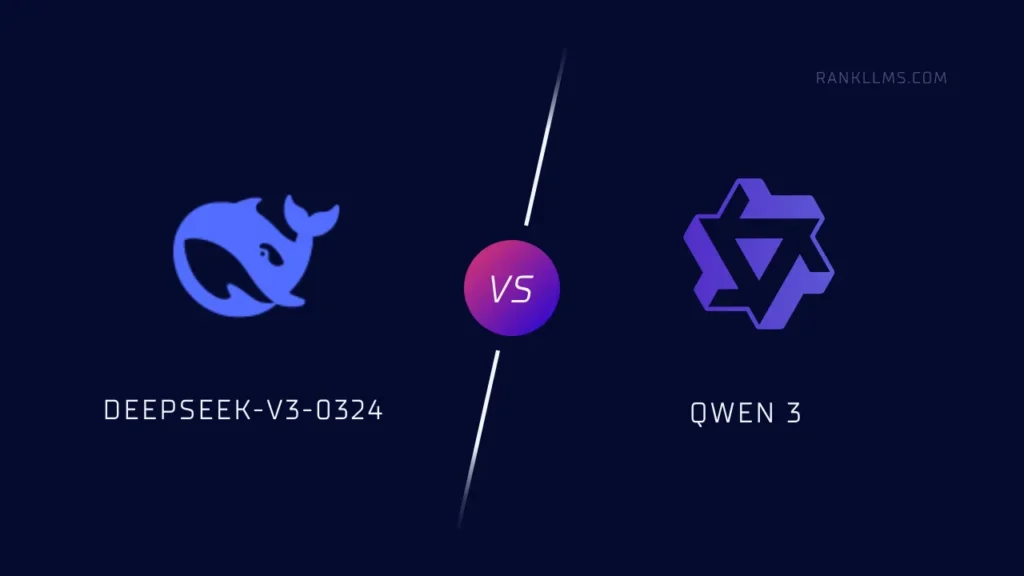
| Feature | DeepSeek‑V3‑0324 | GPT‑4 / Claude |
| License | MIT Open Source | Proprietary |
| Cost | Free | Subscription/API |
| Deployment | Local & Hosted | Hosted APIs only |
| Scale | ~671B | Varies |
| Fine-Tuning | Yes | Often Limited |
| Multimodal | No | Yes |
| Context Window | Up to 128K | Varies |
Takeaway:
DeepSeek‑V3‑0324 excels in accessibility, scalability, and customization, whereas commercial LLMs offer polished multimodal functionality and enterprise support. For text-centric applications, DeepSeek‑V3‑0324 is a robust alternative to subscription-based AI.
Advantages and Limitations
Advantages
- Free and MIT-licensed
- Massive parameter scale with selective expert activation
- Competitive NLP and code-generation performance
- Extended context support for long-form documents
- Flexible deployment: local or cloud platforms
Limitations
- Lacks built-in multimodal capabilities
- Full precision deployment requires substantial memory
- Performance can vary based on hardware and optimization setup
Getting Started: Deployment & Integration
Download the Model Weights
- Available via Hugging Face
- Official GitHub repositories provide MIT-licensed weights and documentation.
Choose a Deployment Method
- Local deployment: Use quantization and low-memory setups to reduce resource usage
- Hosted platforms: Utilize APIs or cloud frameworks supporting MoE models
Integration with Applications
- Use standard LLM frameworks like Hugging Face Transformers
- Embed within chatbots, content generators, or analytics tools
Fine-Tune for Specific Tasks
- Customize for SEO content, chatbot interactions, or enterprise NLP workflow.s
- Leverage extended context for understanding documents spanning thousands of tokens.
FAQs
A: It’s MIT-licensed and free for both personal and commercial projects.
A: It is text-centric only and doesn’t support multimodal inputs yet.
A: It has ~671–685 billion parameters, with only ~37B active per task.
A: Weights are available on Hugging Face and GitHub under the MIT license.
A: For many text-based and reasoning tasks, it competes closely with models like GPT-4 or Claude.
Conclusion
DeepSeek‑V3‑0324 is a high-performance, open-source large language model meticulously engineered to deliver scalable natural language processing at low computational cost. Leveraging a Mixture-of-Experts (MoE) architecture, this model selectively activates the most relevant sub-networks for each task, ensuring both efficiency and optimal inference performance. Its combination of massive scale and modular design makes it suitable for developers and enterprises seeking high-quality AI without Subscription fees.
The ultimate open-source AI powerhouse for 2025–2026. Learn its architecture, features, real-world applications, and how it compares to GPT‑4 and Claude.”