Introduction
Artificial intelligence is no longer confined to Smartphones, laptops, or cloud-based platforms.
Instead, it is rapidly transitioning into something far more immersive, intuitive, and seamlessly integrated into our daily existence.
Welcome to the era of wearable cognition.
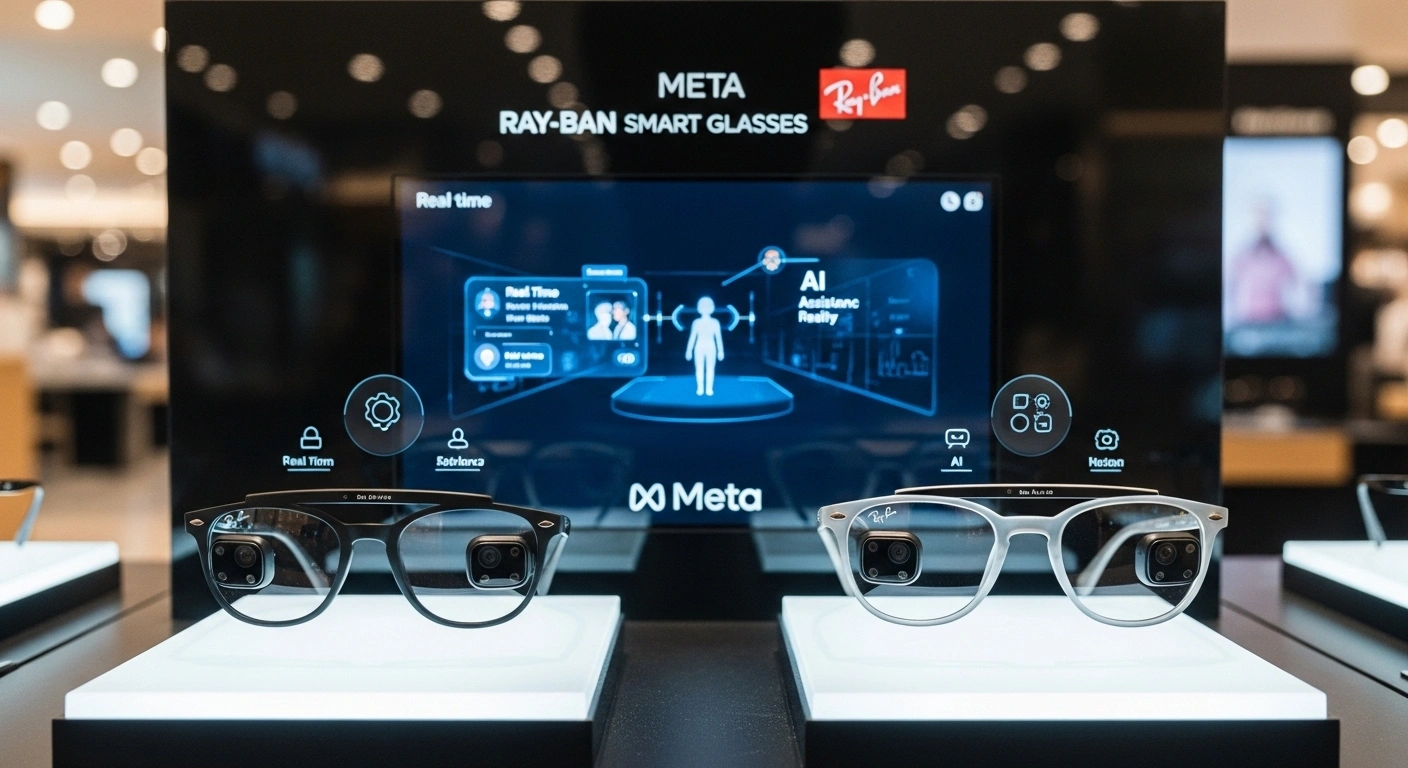
The Meta Platforms Ray-Ban Display AI Glasses represent a revolutionary leap in how humans interact with digital intelligence. By merging fashion aesthetics, AI-driven intelligence, and augmented visual overlays, these glasses promise to redefine personal computing.
But let’s address the real question:
Are these glasses genuinely the future of computing?
Or are they another over-marketed, short-lived innovation?
In this comprehensive guide, you’ll uncover:
- How the AI + display ecosystem truly operates
- Practical use cases most competitors overlook
- Transparent advantages, drawbacks, and constraints
- Whether investing in them in 2026 is actually worthwhile
By the end, you won’t just understand the buzz—you’ll grasp the practical reality behind the innovation.
What Are Meta Ray-Ban Display AI Glasses?
The Meta Ray-Ban Display AI Glasses are next-generation intelligent eyewear engineered to deliver real-time information directly into your visual field.
Imagine a compact smartphone embedded into your vision, but enhanced with contextual awareness and predictive intelligence.
Core Concept:
Rather than actively searching for Information, the system anticipates and delivers relevant data proactively.
What Makes Them Distinct?
Unlike earlier smart glasses that struggled with adoption, these devices incorporate:
- Integrated Heads-Up Display (HUD) within the lens
- Advanced context-aware AI assistant
- Embedded camera and microphone array
- Open-ear directional audio output system
- Voice and gesture-based interaction controls
This is not merely wearable hardware—it is ambient computing in action.
Key Features That Make Them Unique
Built-in Display (HUD Experience)
The Heads-Up Display (HUD) is arguably the most transformative component.
Functionality:
- Projects notifications into your field of vision
- Displays real-time navigation overlays
- Provides contextual AI insights instantly
Why It Matters:
Most articles oversimplify this feature.
The display is not a passive screen.
It is adaptive and responsive, meaning
- It reacts dynamically to your surroundings
- It prioritizes relevant data in real time
Example:
You glance at a café →
AI overlays ratings, reviews, and popular items
No manual search required. No friction.
Meta AI Assistant Capabilities
The AI assistant functions as a real-time cognitive companion.
Capabilities Include:
- Instant query resolution
- Live language Translation
- Object and environment recognition
- Information summarization
- Task automation
Real-World Scenario:
While shopping:
- You observe a product
- AI analyzes it instantly
- Displays pricing, reviews, and alternatives
This is where AI transitions from theoretical utility to practical application.
Camera, Audio & Connectivity
These glasses are not just smart—they are multimodal devices.
Camera Capabilities:
- High-definition photo capture
- First-person (POV) video recording
Audio System:
- Open-ear speakers for situational awareness
- Directional sound for privacy
Microphone Array
- Multi-mic setup for accurate voice capture
Connectivity:
- Bluetooth integration
- Wi-Fi synchronization
Together, these components form a cohesive hands-free ecosystem.
How the AI + Display Actually Works
This is the most misunderstood—and most critical—aspect.
Step-by-Step Workflow:
- You visually focus on an object
- The camera captures environmental data
- AI processes the input in real time
- Relevant information is displayed instantly
This paradigm is known as contextual AI computing.
Practical Example:
While traveling internationally:
- A person speaks a foreign language
- AI detects and processes speech
- Translation appears instantly in your vision
No smartphone. No delays. interruptions.
Real-Life Use Cases
This is where these glasses transition from novelty to necessity.
Smart Shopping Assistant
- Instantly scan and analyze products
- Compare prices across platforms
- Evaluate ingredients or specifications
Eliminates the need for manual research.
Travel Companion
- Real-time translation
- Navigation overlays
- Instant access to local insights
Travel becomes frictionless and intelligent.
Content Creation
- Capture immersive POV footage
- Record experiences instantly
- Share seamlessly
Ideal for digital creators and influencers.
Everyday Productivity
- Voice-based messaging
- Hands-free calling
- Smart reminders
Reduces dependency on screens.
Fitness & Lifestyle
- Activity tracking
- Audio-guided sessions
- Distraction-free focus
Technology integrates naturally into daily routines.
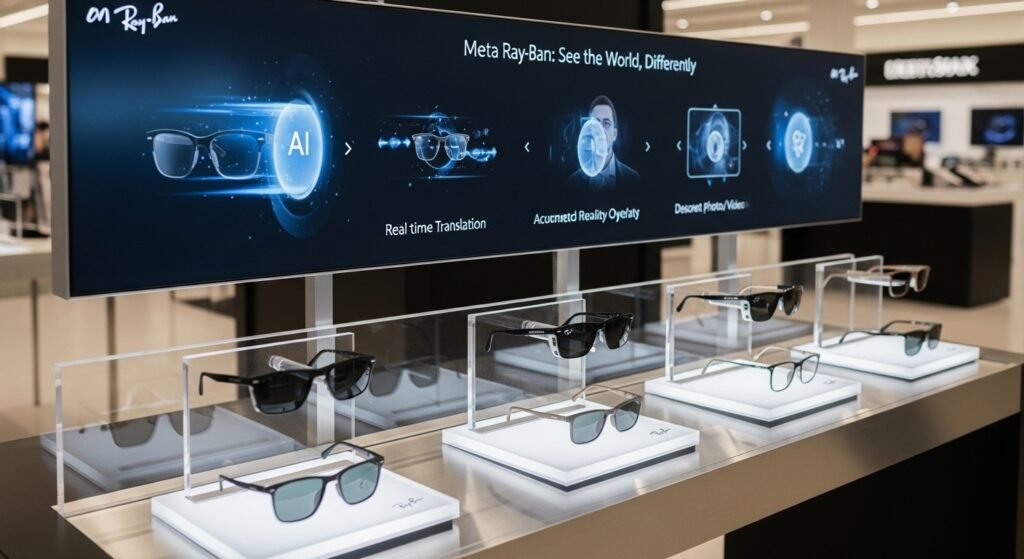
Meta Ray-Ban Display AI Glasses bring real-time AI, HUD visuals, and hands-free computing into your everyday life.
Pros & Cons
Advantages
- Innovative HUD interface
- Real-time AI assistance
- Fully hands-free operation
- Stylish and socially acceptable design
- Valuable for creators and professionals
Disadvantages
- Limited application ecosystem
- Battery constraints
- AI accuracy is still evolving
- Premium pricing
- Early-stage limitations
Transparency builds trust—and improves SEO credibility.
Limitations You Must Know
Despite their innovation, these glasses are not without flaws.
Key Constraints:
- Closed ecosystem architecture
- Limited third-party integration
- Regional availability restrictions
- Occasional AI inaccuracies
- First-generation display limitations
Reality check:
This is early-phase technology, not a finished product.
Feature Breakdown Table
| Feature | Meta Display Glasses | Traditional Smart Glasses |
| Display | ✅ Integrated HUD | ❌ None |
| AI | Advanced contextual intelligence | Basic assistant |
| Camera | High-quality | Limited |
| Use Cases | Real-world interaction | Basic functionality |
| Experience | Immersive | Passive |
| Price | Premium | Moderate |
Meta Ray-Ban Display vs Smartphone
| Feature | AI Glasses | Smartphone |
| Hands-Free | ✅ Yes | ❌ No |
| Interaction | In-lens interface | External display |
| Convenience | High | Medium |
| Power | Limited | High |
| Apps | Limited | Extensive |
Key takeaway:
AI glasses are not replacing smartphones yet, but they are evolving rapidly.
Pricing Overview (2026)
| Model | Price | Target Audience |
| Base Model | $299–$399 | Casual users |
| Mid Variant | $400–$500 | Tech enthusiasts |
| Premium | $500+ | Content creators |
Pricing reflects innovation cost and early adoption value.
Are Meta Ray-Ban Display AI Glasses Worth It in 2026?
Let’s evaluate realistically.
YES, if you
- Enjoy cutting-edge technology
- Want hands-free AI assistance
- Create digital content
- Appreciate innovation
NO, if you:
- Expect smartphone-level performance
- Need long battery life
- Prefer mature ecosystems
- Avoid experimental technology
Final Verdict:
Exciting, but not essential—yet
Future of AI Glasses
The future trajectory is where things become truly transformative.
Predictions:
- AI glasses may eventually replace smartphones
- Displays will become nearly invisible
- AI will achieve full contextual awareness
- Physical screens may disappear entirely
This paradigm is known as Invisible Computing.
FAQs
A: Not fully. Some features work, but full functionality needs a smartphone.
A: Recording must be manually activated, and privacy indicators are included.
A: Not yet. They are assistive devices, not replacements.
A: Only the wearer can see it.
A: But mainly for light tasks and convenience.
Conclusion
The Meta Ray-Ban Display AI Glasses are more than just another technological gadget.
They symbolize a paradigm shift in human-computer interaction.
By integrating:
- Artificial intelligence
- Augmented display systems
- Hands-free interaction
They introduce a new computing model that feels natural, intuitive, and powerful.
However, it is essential to remain grounded:
This is just the beginning.
The true transformation is still unfolding.