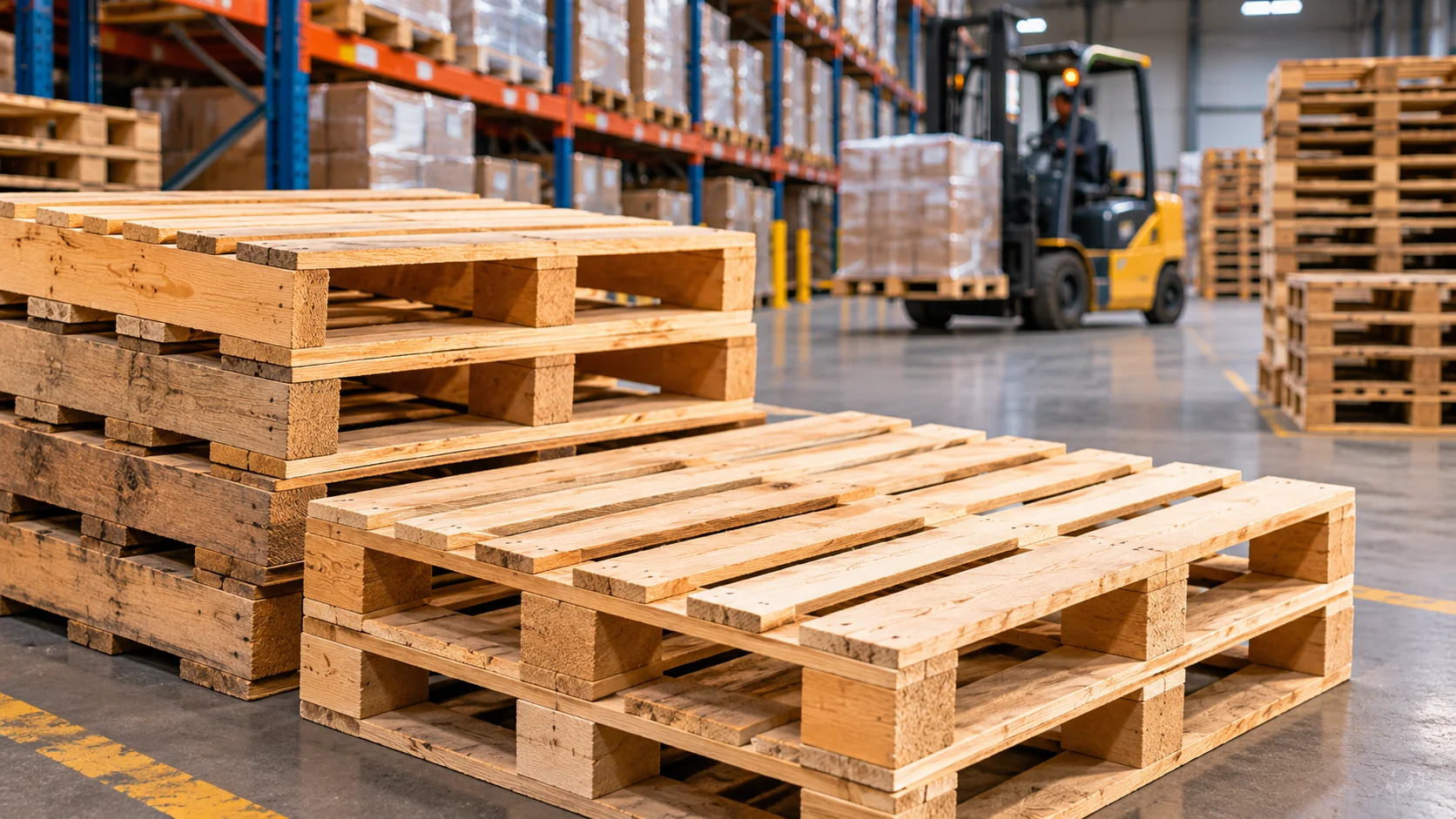
Whether you manage a warehouse, operate a manufacturing facility, or coordinate a distribution network, choosing the right pallets can have a direct impact on your shipping costs and operational efficiency. When businesses buy wooden pallets, they need to consider more than the initial purchase price. Pallet dimensions, load capacity, construction quality, condition, and compatibility with material-handling equipment all influence how effectively pallets perform throughout the supply chain.
Wooden pallets remain a widely used option for storing, handling, and transporting goods. They offer a practical combination of strength, versatility, repairability, and cost efficiency. However, not every pallet is suitable for every application. Understanding the available grades and specifications can help businesses make more informed purchasing decisions.
Why Wooden Pallets Remain a Popular Choice
Wooden pallets are commonly used across manufacturing, retail, food and beverage, warehousing, and logistics operations. Their popularity comes from their ability to support different types of loads while working with standard warehouse equipment.
Some of their key advantages include:
- Strength and durability: Properly constructed wooden pallets can support substantial loads and withstand repeated handling.
- Repairability: Damaged boards or components can often be repaired or replaced, extending the useful life of a pallet.
- Versatility: Wooden pallets are available in standard dimensions as well as custom sizes for specialized products.
- Availability: New, recycled, and reconditioned options give businesses flexibility when managing procurement budgets.
- Reusability: Pallets that remain structurally sound can be reused across multiple shipping and storage cycles.
For companies that move products regularly, selecting dependable pallets can help reduce handling disruptions and maintain a more consistent flow of goods.
Understand Standard GMA Pallet Dimensions
One of the first considerations when purchasing wooden pallets is size. The standard GMA pallet measures 48 inches by 40 inches and is widely used in grocery, retail, warehousing, and distribution environments.
Because this dimension is common across many supply chains, GMA pallets can simplify storage planning and transportation. They are often compatible with established material-handling systems, including forklifts, pallet jacks, and warehouse equipment designed around standard pallet footprints.
However, standard dimensions are not automatically the right choice for every business. Before placing an order, consider:
- The dimensions and weight of the products being transported.
- Whether pallets will be stored in warehouse racks.
- The available space inside trucks and shipping containers.
- Forklift and pallet jack entry requirements.
- Whether products need to overhang the pallet or fit entirely within its footprint.
If your products have unusual dimensions or specific handling requirements, custom pallet configurations may be worth considering.
Compare New, Grade A, Grade B, and Recycled Pallets
Wooden pallets are available in different grades and conditions. Understanding these differences can help businesses balance purchase costs with expected performance.
New Wooden Pallets
New pallets are manufactured using unused lumber and are suitable for businesses that require consistent construction and specifications. They can be particularly useful for operations with strict handling requirements or products that need a uniform pallet presentation.
Grade A Pallets
Grade A pallets are generally premium-quality recycled or reconditioned pallets. They may have minor repairs but should retain their structural integrity and be suitable for repeated handling.
These pallets can provide a balance between dependable performance and purchasing cost, depending on their condition and specifications.
Grade B Pallets
Grade B pallets are typically more economical reconditioned options. They may show more visible signs of previous use or repairs than Grade A pallets.
They can be suitable for many general storage and transportation applications, provided they have been properly inspected and meet the required load and handling specifications.
Recycled Wooden Pallets
Recycled pallets can help businesses reduce material waste and manage procurement expenses. Their condition and performance can vary, so buyers should confirm the grade, repair history, dimensions, and load requirements before ordering.
The most suitable option depends on how frequently the pallets will be used, the value and weight of the goods, and the operational standards of the facility.
Check Load Capacity Before Ordering
Load capacity is one of the most important specifications to verify when buying wooden pallets. A pallet must be suitable for the weight of the products it carries and the conditions under which it will be handled or stored.
Businesses should distinguish between different types of load capacity:
- Static load: The weight a pallet can support while stationary on a level surface.
- Dynamic load: The weight it can support while being moved using equipment such as a forklift or pallet jack.
- Racking load: The weight it can support when stored on a warehouse rack, where the pallet is supported at specific points.
These capacities are not interchangeable. A pallet that supports a particular weight on the warehouse floor may not safely support the same load in a racking system.
Always confirm the manufacturer’s or supplier’s stated capacities for the intended application. Consider the weight distribution of the products, stacking arrangements, and handling conditions before selecting a pallet.
Consider Pallet Construction and Forklift Entry
Wooden pallets commonly use stringer or block construction. Each design offers different handling characteristics.
Stringer pallets use parallel wooden supports between the top and bottom deck boards. Depending on their construction, they may provide two-way or four-way forklift entry.
Block pallets use blocks positioned between the deck boards. Their design can provide four-way access, making them useful in operations where equipment needs to approach pallets from different directions.
The right construction depends on your warehouse layout, material-handling equipment, and storage requirements. Businesses should also check deck-board spacing, stringer condition, fasteners, and overall structural integrity.
Do You Need Heat-Treated Wooden Pallets for Export?
Companies shipping products internationally may need to consider phytosanitary requirements for wood packaging materials.
ISPM 15 is an international standard covering wood packaging material used in international trade. Regulated wooden packaging materials generally need to undergo an approved treatment and carry the required marking, subject to applicable exemptions and destination-country rules.
Heat treatment is one recognized treatment method. Under ISPM 15, the wood must reach a core temperature of at least 56°C for a minimum of 30 minutes.
If your business exports goods, confirm the requirements for the destination market and choose appropriately treated and marked pallets when required. Do not assume that an ordinary wooden pallet is automatically suitable for international shipments.
What to Consider Before Buying Wooden Pallets in Bulk
For businesses purchasing pallets regularly, evaluating suppliers and specifications before committing to a large order can help avoid unnecessary costs and operational problems.
Keep these factors in mind:
- Required quantity: Estimate your regular pallet consumption and account for seasonal demand or production changes.
- Pallet dimensions: Confirm whether standard GMA 48 × 40 pallets or custom dimensions are appropriate.
- Grade and condition: Specify whether you need new, Grade A, Grade B, or recycled pallets.
- Load requirements: Check static, dynamic, and racking capacities for your actual operating conditions.
- Construction: Select stringer or block designs based on equipment access and handling needs.
- Export requirements: Confirm whether ISPM 15 treatment and marking are necessary.
- Supplier reliability: Consider product consistency, delivery coverage, available inventory, and the supplier’s ability to support repeat orders.
- Total procurement cost: Compare pricing alongside freight, repairs, replacement frequency, and storage requirements.
A lower purchase price may not always translate into lower long-term costs. Pallets that frequently require repairs or replacements can create additional expenses and interrupt warehouse operations.
Find the Right Wooden Pallets for Your Operation
Choosing the right wooden pallets involves matching product specifications to the practical needs of your supply chain. Standard GMA pallets can work well for businesses that need widely used dimensions, while different grades provide options for balancing quality, condition, and budget. Custom and heat-treated pallets can address more specialized handling and export requirements.
Before making a purchase, define your required dimensions, load capacity, construction type, and expected usage. Then compare available options based on both performance and overall procurement value.
Meridian Packaging offers GMA-standard pallet options alongside different grades, recycled products, custom configurations, and heat-treated export pallets. Businesses can review available specifications and request a quote based on their operational requirements and order quantities.