Introduction
Artificial intelligence APIs are transforming how Developers design and deploy modern digital applications. From intelligent chatbots and automated programming assistants to sophisticated automation platforms and AI-powered agents, developers increasingly depend on advanced language models to build smarter, faster, and more adaptive systems.
Over the past few years, DeepSeek has rapidly gained traction among developers. The organization has attracted widespread attention for its highly capable reasoning models, strong programming capabilities, and developer-focused AI infrastructure.
Developers can access these models using the DeepSeek API, which allows software systems to send prompts, analyze text, and receive AI-generated responses almost instantly.
However, before developers can connect these models to their applications, they must first create a DeepSeek API key.
An API key works as a secure authentication credential that allows your software to communicate with DeepSeek servers and request AI-powered outputs.
Whether you are a beginner programmer, software engineer, startup founder, or AI researcher, this comprehensive guide will help you integrate DeepSeek AI into your applications efficiently and safely.
What Is DeepSeek?
DeepSeek is an artificial intelligence research organization that develops Large Language Models (LLMs) engineered for advanced reasoning, programming support, and natural language understanding.
These models are trained on enormous datasets and refined using sophisticated machine learning techniques to handle complex computational and linguistic challenges.
Through the DeepSeek API, developers can link their applications directly to these models and request AI-generated outputs.
In simple terms, the API acts as a communication bridge between your software and DeepSeek’s AI infrastructure.
DeepSeek models are capable of performing a broad range of tasks, including:
- Natural language processing
- Code generation and programming assistance
- Logical reasoning and analytical thinking
- Mathematical problem solving
- Conversational AI interactions
- AI-driven automation workflows
Because of these capabilities, DeepSeek can be integrated into many different systems, such as:
- Web platforms
- SaaS products
- Mobile applications
- Developer utilities
- Automation tools
- Enterprise AI ecosystems
The platform is particularly popular among developers building AI-powered coding assistants and intelligent automation software.
DeepSeek AI Models Explained
DeepSeek provides several artificial intelligence models optimized for different workloads and performance requirements.
Each model is designed for specific types of tasks such as conversation, reasoning, or programming support.
Below are some of the most widely used models available through the DeepSeek API.
| Model | Description | Best For |
| deepseek-chat | Conversational language model | Chatbots, assistants |
| deepseek-reasoner | Advanced reasoning model | Math, coding, logic |
| deepseek-coder | Specialized coding model | Code generation |
deepseek-chat
The deepseek-chat model is optimized for conversational interactions and dialogue-based systems.
Developers commonly use this model to create:
- AI assistants
- customer support chatbots
- conversational interfaces
- virtual help desks
- AI-powered messaging tools
Because it is trained on extensive conversational datasets, the model can generate human-like replies that feel natural, fluent, and contextually relevant.
This makes it particularly useful for interactive applications where user engagement is essential.
deepseek-reasoner
The deepseek-reasoner model focuses on complex reasoning tasks that require logical analysis and structured thinking.
This model performs exceptionally well in areas such as:
- mathematics
- algorithm development
- logical problem solving
- programming challenges
Developers often integrate this model into tools that require analytical capabilities or computational reasoning.
For example, AI systems designed for problem-solving, coding interviews, or academic analysis can benefit significantly from this model.
deepseek-coder
The deepseek-coder model is specifically designed for software development tasks.
It can assist developers with:
- code generation
- debugging errors
- explaining complicated code snippets
- generating technical documentation
- optimizing algorithms
Because of these abilities, many developers use this model when building:
- AI coding assistants
- developer productivity platforms
- automated code review systems
What Is a DeepSeek API Key?
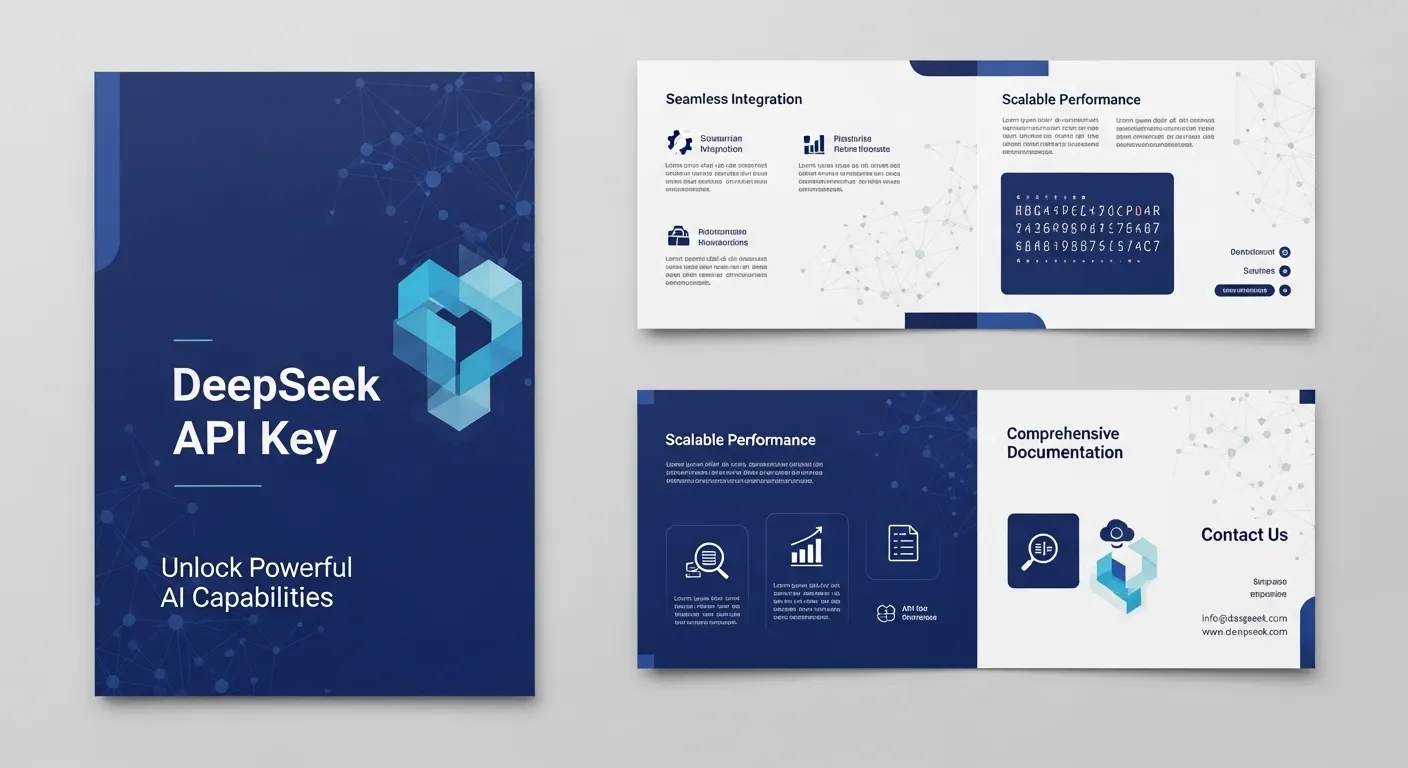
A DeepSeek API key is a unique authentication token that enables your application to access the DeepSeek API.
Whenever your software sends a request to DeepSeek’s servers, the API key verifies your identity and ensures that the request is authorized.
The key must be included inside the request header.
Example API Authentication Header
Authorization: Bearer YOUR_API_KEY
The DeepSeek API key allows the platform to:
- authenticate your application
- Monitor API usage
- enforce rate limits
- calculate billing
Without a valid API key, your application cannot communicate with DeepSeek servers.
In other words, the API key acts as a secure gateway between your software and DeepSeek’s AI infrastructure.
Why API Keys Are Important
API keys play a crucial role in platform security and usage management.
They ensure that only verified users and authorized applications can access the API.
Key advantages include:
Secure Authentication
API keys help confirm the identity of the requesting application.
This prevents unauthorized systems from accessing DeepSeek services.
Usage Tracking
Developers can monitor their API activity, including:
- request volume
- token consumption
- response statistics
This information helps optimize both cost efficiency and system performance.
Billing Accuracy
Because API keys are linked to developer accounts, the system can accurately calculate billing based on usage.
Access Control
Developers can revoke or rotate API keys to maintain secure access control.
This is especially important for enterprise environments and production applications.
Why Developers Use DeepSeek API
DeepSeek has become increasingly popular among developers for several important reasons.
Below are some of the major Advantages of the platform.
Cost Efficiency
One of the biggest advantages of the DeepSeek API is its competitive pricing model.
Instead of charging fixed licensing fees, DeepSeek uses a token-based billing structure.
This means developers only pay for the amount of text processed by the AI model.
Benefits include:
- lower operational expenses
- scalable consumption
- pay-as-you-go pricing
For startups and independent developers, this pricing approach makes advanced AI technology far more accessible.
Advanced Reasoning Models
DeepSeek models are particularly strong in logical reasoning and programming tasks.
They perform well in areas such as:
- mathematical reasoning
- coding challenges
- algorithmic analysis
- debugging and optimization
Because of this strength, developers frequently use DeepSeek to build:
- AI coding assistants
- developer automation tools
- intelligent reasoning platforms
OpenAI SDK Compatibility
Another significant advantage of DeepSeek is OpenAI SDK compatibility.
Developers who already use OpenAI libraries can integrate DeepSeek with minimal code modifications.
Benefits include:
- faster deployment
- easier migration
- compatibility with existing frameworks
This dramatically reduces the learning curve for developers switching platforms.
DeepSeek API Pricing Explained
DeepSeek uses a token-based pricing system.
A token represents a small segment of text processed by the AI model.
Approximate conversions:
- 1 token ≈ 4 characters
- 100 tokens ≈ 75 words
Pricing depends on several factors:
- input tokens
- output tokens
- Selected model
Example Pricing Table
| Model | Input Cost | Output Cost |
| deepseek-chat | Low | Low |
| deepseek-reasoner | Medium | Medium |
| deepseek-coder | Medium | Medium |
Example Cost Calculation
If a request is processed:
- 500 input tokens
- 800 output tokens
Total tokens processed:
1300 tokens
Billing will be calculated based on the total tokens consumed.
DeepSeek API vs OpenAI API
Many developers compare DeepSeek and OpenAI before choosing an AI platform.
| Feature | DeepSeek | OpenAI |
| Pricing | Lower | Higher |
| SDK compatibility | Yes | Native |
| Ecosystem | Growing | Large |
| Reasoning ability | Strong | Strong |
| Developer community | Smaller | Very large |
Pros of DeepSeek
- lower pricing
- strong reasoning models
- OpenAI SDK compatibility
Pros of OpenAI
- mature ecosystem
- larger developer community
- more integrations
Security Best Practices for API Keys
Protecting your API key is extremely important.
If someone gains access to your key, they could use your account and generate unexpected charges.
Use Secret Management Tools
Professional developers store credentials using secure systems such as:
- AWS Secrets Manager
- HashiCorp Vault
- secure environment configuration tools
Never Expose Keys in Frontend Code
API keys must only be used on server-side systems.
Never include them in:
- client-side JavaScript
- public repositories
- browser-based applications
Rotate API Keys Regularly
If a key is compromised:
- Revoke it immediately and generate a new key
Regular rotation helps maintain strong security.
Common DeepSeek API Errors & Fixes
Developers may encounter several common issues while working with the API.
Invalid API Key
Cause:
- incorrect key
- formatting errors
Solution:
- Verify environment variables
- Check authorization headers
Authentication Error
Cause:
Missing authorization header.
Fix:
Authorization: Bearer YOUR_API_KEY
Rate Limit Error
Cause:
Too many Requests are sent in a short period.
Solution:
- Implement retry logic
- reduce request frequency
Model Not Found
Cause:
Incorrect model name.
Solution:
Use the /models endpoint to list available models.
Best Use Cases for DeepSeek API
Developers use DeepSeek AI in many real-world scenarios.
AI Chatbots
Companies build customer service chatbots using DeepSeek.
Benefits include:
- instant responses
- automated customer support
- reduced operational costs
Code Assistants
DeepSeek is widely used for developer productivity tools such as:
- AI coding assistants
- automated debugging systems
- code explanation tools
AI Agents
AI agents can automatically perform tasks such as:
- workflow automation
- task scheduling
- Data processing
Document Analysis
Organizations use DeepSeek for:
- summarizing documents
- extracting insights
- analyzing reports
Content Generation
DeepSeek can generate:
- blog articles
- marketing copy
- email campaigns
- product descriptions
Pros & Cons
Pros
- affordable pricing
- powerful reasoning models
- OpenAI SDK compatibility
- scalable token usage
- strong automation capabilities
Cons
- smaller ecosystem
- limited documentation compared to competitors
- fewer integrations than established platforms
FAQs
A: DeepSeek typically provides trial credits for new users, but most usage is billed through token-based pricing.
A: DeepSeek is compatible with OpenAI SDKs, making integration simple.
A: DeepSeek models are optimized for code generation, debugging, and programming assistance.
A: You should immediately:
Revoke the key
generate a new API key
This prevents unauthorized usage.
A: The API is developer-friendly, and beginners can get started quickly with simple examples.
Conclusion
The DeepSeek API key serves as the primary gateway for integrating powerful AI models into modern software applications.
With only a few steps, developers can generate a key, authenticate requests, and build intelligent systems such as chatbots, coding assistants, automation platforms, and AI agents.
One of the biggest advantages of DeepSeek is its Combination of affordability, performance, and strong reasoning capabilities.
This makes it an excellent choice for startups, independent developers, and organizations building scalable AI-powered solutions.
As the artificial intelligence ecosystem continues to evolve, platforms like DeepSeek are becoming essential tools for developers who want to create smarter, more efficient, and highly automated applications.