Two drivers, two versions of the same crash. When the stories conflict, investigators turn to vehicle damage patterns — the dents, scrapes, and crush marks that the collision itself left behind.
Physical damage cannot change its account after the fact. Read carefully, it can support one version of events, undermine the other, or show that both drivers remember the day imperfectly.
This article explains how damage is read and what happens when it contradicts a driver’s statement. It is general information only, not legal advice, and it describes investigative and claims practice in general terms.
How Can Vehicle Damage Contradict a Driver’s Account?
Damage contradicts an account when the physical marks cannot fit the sequence of events a driver describes. Four features of the damage usually carry the most information.
Point of Impact
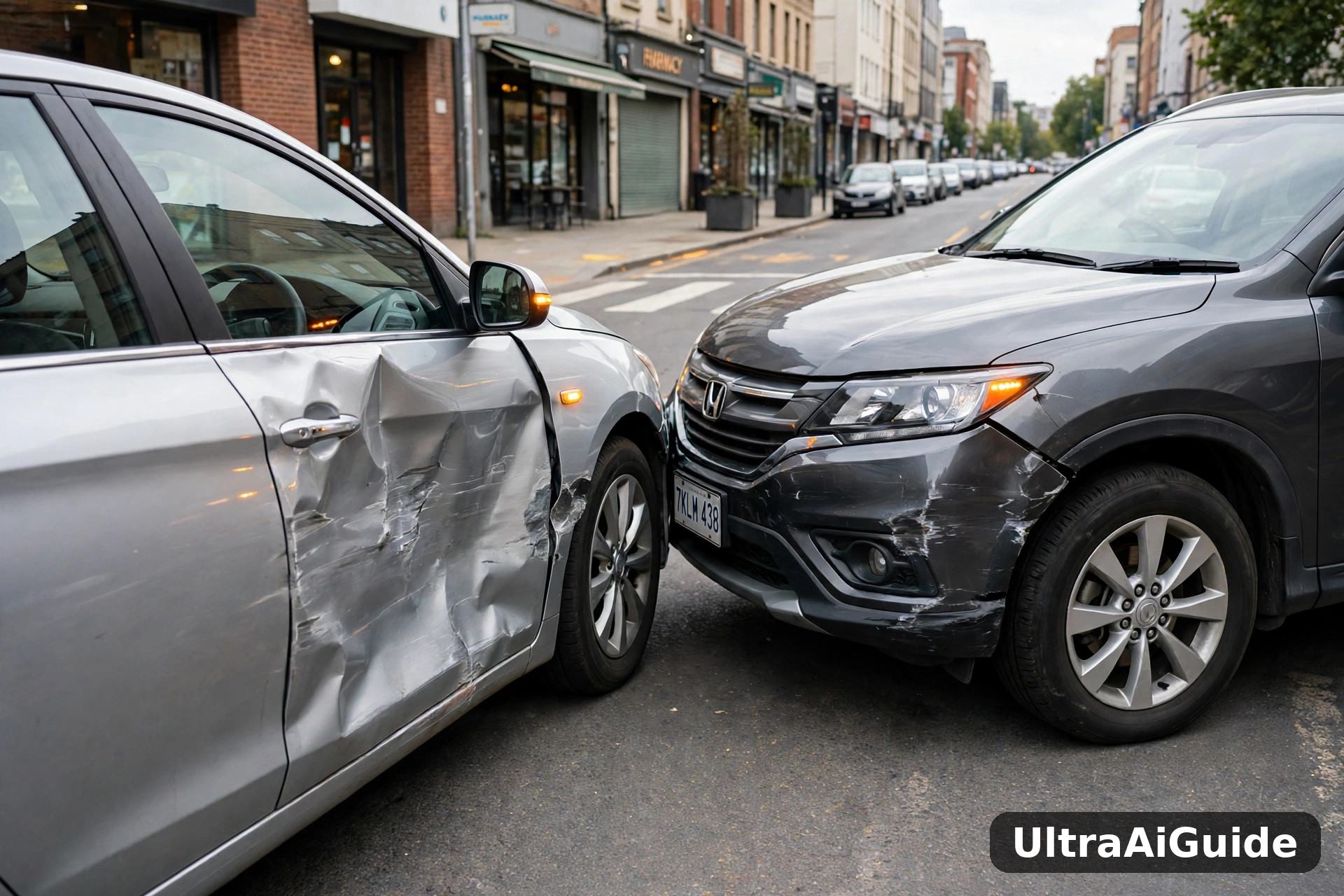
The location of the damage shows which part of each vehicle made contact. Heavy damage to the side of a car, for instance, sits awkwardly with a claim that it was struck purely from behind.
Depth of Crush Damage
Deep crush damage usually points to higher speed or greater force. If a driver insists they were barely moving, severe structural deformation raises obvious questions about that account.
Paint Transfer and Scrape Direction
Paint left on the other vehicle, and the direction of scrape marks, can show the angle at which the cars met and how they were moving relative to each other at impact.
Debris and Final Positions
Broken glass, fluid trails, and the places where the vehicles came to rest all help reconstruct the sequence. Debris tends to fall near the point of impact, which anchors the reconstruction.
Damage Patterns That Commonly Expose a False Account
Some mismatches appear again and again. A driver claims a gentle tap, yet the other car’s frame rails are bent. Another claims to have been stationary, yet the scrape direction shows forward motion.
Height mismatches matter too. Damage sitting far above or below a bumper line can suggest a different vehicle was involved, or that one car was diving under braking at the moment of contact.
None of these patterns proves a case on its own. Each simply gives investigators a concrete reason to test the spoken account against the physical record.
Why Does Physical Evidence Often Carry More Weight?
Memory is genuinely unreliable after a collision. Shock, speed, and self-interest all distort recall, while a crushed panel looks the same a month later as it did at the scene.
Most modern vehicles also carry an event data recorder, which can capture speed, braking, and throttle inputs in the seconds around a crash. Guidance on how event data recorders work explains what these devices do and do not record.
Statements can be honestly mistaken as well as deliberately false. Physical evidence does not take sides, which is why adjusters, experts, and courts tend to start from it.
How Insurers and Reconstruction Experts Read the Damage
Insurance adjusters usually begin with photographs, repair estimates, and the crash report, comparing the damage on both vehicles for consistency. Damage that cannot be matched between the two cars is an early warning sign.
Reconstruction experts go further, combining crush measurements, scene evidence, and vehicle data to model how the collision most likely happened. Their conclusions are expressed in terms of physical consistency and probability, not absolute certainty.
What Oklahoma Laws Apply When Fault Is Disputed?
Fault is decided under state law, so the rules governing a disputed crash depend on where it happened. Many states use comparative negligence, under which each driver’s share of fault affects what they can recover.
Oklahoma, the state used as the example here, applies a modified form of that approach: an injured person’s recovery depends on how their share of fault compares with the other party’s. Plain explainers of how comparative negligence works set out how the variants differ from state to state.
Filing deadlines are also set by state law and vary widely. Missing the deadline in the state where the crash happened can end a claim regardless of the evidence, which is why early advice matters.
Example: When Damage Tells a Different Story
Consider a hypothetical crash at an intersection. The other driver claims you ran a red light and struck the front of their vehicle as they crossed lawfully.
The damage, though, is concentrated on your driver’s side door, while their front bumper is crushed. That pattern suggests their vehicle struck yours — which may support your account that they entered the intersection unsafely.
What Should You Do If the Other Driver’s Story Doesn’t Match the Damage?
If you suspect the accounts and the damage disagree, protecting the evidence early matters more than arguing at the roadside. The usual steps are straightforward:
- Photograph all vehicles from several angles, including close-ups of the damage.
- Take pictures of skid marks, debris, and traffic signals at the scene.
- Request a copy of the police crash report.
- Ask that both vehicles be preserved for inspection before repairs.
- Collect contact details from any witnesses.
One further point deserves emphasis: do not repair your vehicle until it has been photographed and inspected, because repairs can erase exactly the evidence a dispute turns on. Consumer guidance on what to do after a car accident covers the wider checklist.
What Damage Evidence Cannot Tell You
Damage has limits. It generally cannot show whether a driver was distracted, tired, or looking at a phone, and it rarely fixes exact speeds without supporting data and proper analysis.
Old damage complicates readings as well. A panel may carry marks from an earlier incident, which is why inspectors look for fresh paint transfer, clean fractures, and other signs of recent contact.
Frequently Asked Questions
Can an insurance company decide fault based on vehicle damage?
Yes. Adjusters routinely review photographs, repair estimates, and crash reports when assessing fault. Their decision is an insurance position, however — it is not final if the dispute reaches a court.
Who can analyze vehicle damage patterns?
Accident reconstruction experts study vehicle damage, scene evidence, and recorded vehicle data to explain how a collision most likely occurred. Adjusters, police investigators, and engineers may each analyse part of that picture.
Key Takeaways
- When vehicle damage contradicts a driver’s account, that account loses credibility and fault assessments can shift.
- Point of impact, crush depth, paint transfer, and debris each carry information about how a crash happened.
- Event data recorders may add speed and braking data to the physical picture.
- Fault rules and filing deadlines are set by state law and vary, so the state where the crash happened matters.
- Photographs and vehicle preservation protect the evidence a dispute may later turn on.
Conclusion
Vehicles keep an honest record of a collision, written in bent metal and transferred paint. When that record contradicts a driver’s story, the physical evidence usually gets the closer hearing — provided it was preserved before repairs began.