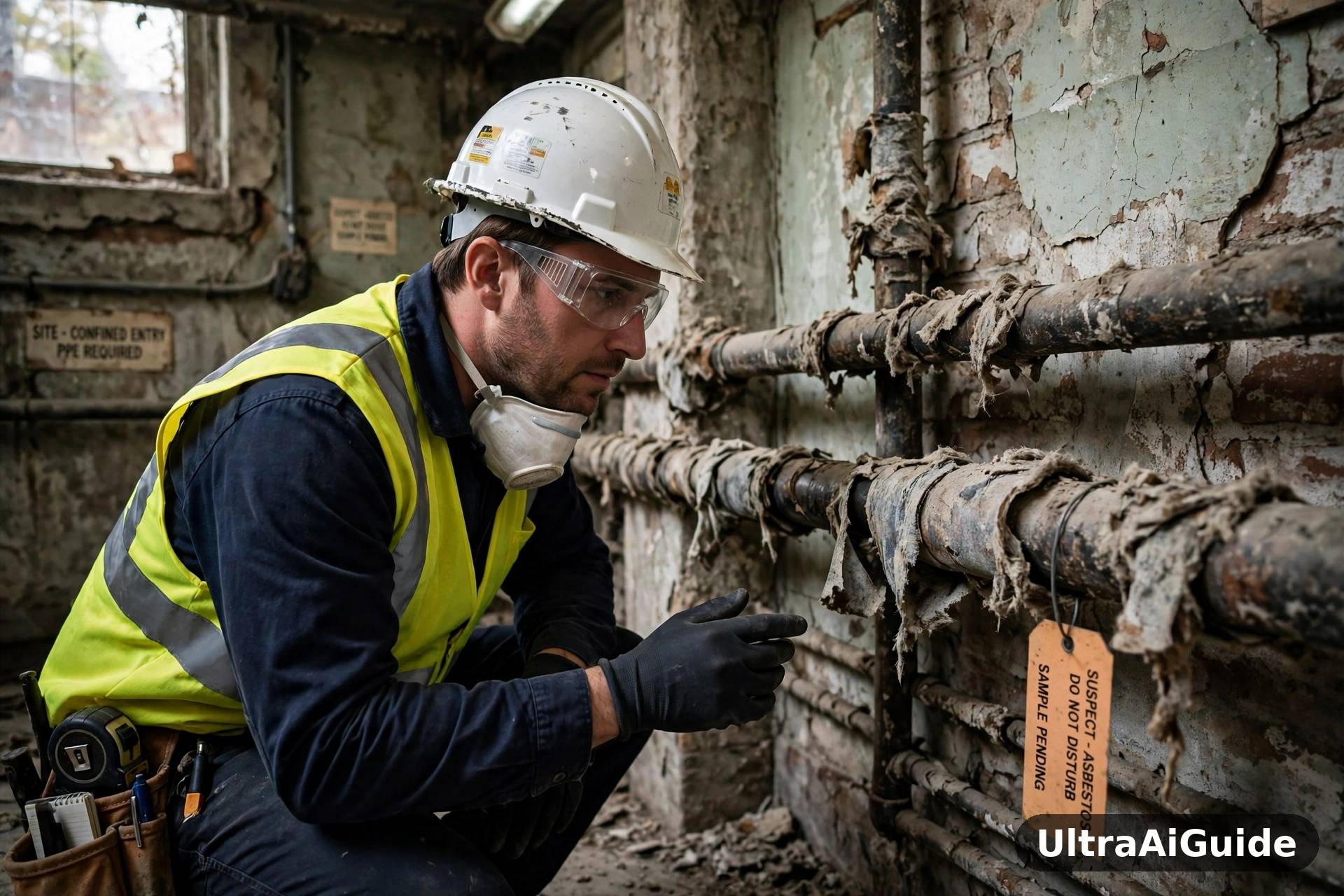
Taken online, asbestos awareness training teaches you to recognise where asbestos might be hiding, and to stop work before you disturb it. It is the quickest legitimate route to the certificate that sites and employers ask for.
It is not a licence to touch asbestos, and it never qualifies you to remove it. Awareness training exists for people whose normal work might bring them near asbestos-containing materials unexpectedly, from electricians and plumbers to caretakers and surveyors.
This guide explains who needs it, what an online course actually covers, how the law treats it and how to choose a provider whose certificate will be accepted on site.
What Is Asbestos Awareness Training?
Asbestos awareness is the entry level of asbestos training, often called Category A. It explains what asbestos is, where it was used in buildings and why breathing in its fibres can cause serious disease years later.
The whole point is avoidance. Awareness training helps you spot suspect materials before you drill, cut or rip out, and tells you exactly what to do when you find something that should not be disturbed.
Who Needs Asbestos Awareness Training?
Anyone whose work could foreseeably disturb the fabric of a building built or refurbished before 2000 may need it. That includes most construction and maintenance trades, plus heating engineers, alarm installers, decorators and facilities staff.
Supervisors and managers need it too, because they plan the work and carry responsibility for stopping it safely. Self-employed tradespeople are not exempt: clients and principal contractors will ask for evidence of training before letting you start.
What the Law Requires
Regulation 10 of the Control of Asbestos Regulations 2012 requires employers to give adequate information, instruction and training to anyone liable to be exposed to asbestos, and to those who supervise them. Awareness training is how most employers meet that duty for general workforces.
The duty sits alongside Regulation 4, which requires those in charge of premises to manage the asbestos in them. Read the full text in the Control of Asbestos Regulations 2012 before relying on any summary, including this one.
What an Online Asbestos Awareness Course Covers
A proper awareness syllabus follows the content the HSE expects. It covers the properties of asbestos, its effects on health, the types of asbestos and the products and places where asbestos-containing materials are commonly found.
It also covers emergency procedures for an accidental discovery or damaged material, and how to avoid risks during everyday tasks. Good courses use photographs of real materials, because recognising textured coatings or pipe lagging matters more than memorising definitions.
How Online Asbestos Awareness Training Works
Online courses are usually self-paced modules with short videos, images and knowledge checks, finished with a final assessment. Most people complete one in one to two hours, and the certificate is available to download as soon as you pass.
The HSE accepts e-learning as a valid way to deliver awareness-level training, which is why online certificates are widely used. What matters is the syllabus and the assessment, not whether you sat in a classroom to receive them.
Category A, B and C: Awareness Is Only the First Level
Asbestos training comes in three categories. Category A is awareness, Category B covers non-licensable work with asbestos, and Category C covers licensable work, which only HSE-licensed contractors can carry out.
An awareness certificate never authorises you to work on asbestos, however experienced you are. If a job involves deliberately disturbing asbestos materials, it needs Category B or C training, proper controls and, for higher-risk work, a licensed contractor.
UKATA, IATP and Why the Badge Matters
UKATA and IATP are the two best-known asbestos training associations in the UK. Both audit their member providers against a set syllabus, check their training materials and maintain registers you can search before booking a course.
The law does not insist on a particular badge, but many principal contractors specify UKATA or IATP certificates in their site rules. A quick search of the UKATA training provider directory settles whether your provider is genuinely registered.
How Long Does the Certificate Last?
The regulations set no fixed expiry date for awareness training, but they do require refresher training whenever it is needed to keep knowledge current. In practice, the industry works to an annual refresher, and many certificates are issued on that basis.
Plenty of sites will not accept an awareness certificate dated more than twelve months ago, whatever the legal position. Treat the anniversary as your renewal date, and keep older certificates as evidence of a continuous training record.
Choosing an Online Provider
Look for a course that follows the recognised awareness syllabus, names its accreditation clearly and ends with a real assessment rather than a simple tick-box. The certificate should show your name, the date and the category of training.
Prices vary widely between providers, and the cheapest course is not always the one a principal contractor will accept. The HSE asbestos guidance for workers is the reference point to judge any course against.
Frequently Asked Questions
Is online asbestos awareness training legally valid?
Yes. The HSE accepts e-learning for awareness-level training, provided the course covers the required syllabus and includes an assessment. Some employers still prefer classroom delivery, but that is their choice rather than a legal requirement.
Does asbestos awareness training let me remove asbestos?
No. Awareness training only teaches recognition and avoidance. Removing or working on asbestos needs Category B training for non-licensable work or an HSE-licensed contractor for licensable work, neither of which an online awareness course provides.
How often should I refresh asbestos awareness training?
Plan on every twelve months. The regulations require refreshers as often as necessary rather than on a fixed cycle, but annual renewal is the industry norm and what most sites check for at induction.
Conclusion
Asbestos awareness training online is a small investment of time that answers a clear legal duty. It will not qualify you to touch asbestos, but it will teach you to recognise it, avoid it and stop work safely.
Choose a course on a recognised syllabus, keep the certificate current with annual refreshers and never let a deadline talk you into disturbing a suspect material. Recognition and restraint are the whole job at this level.