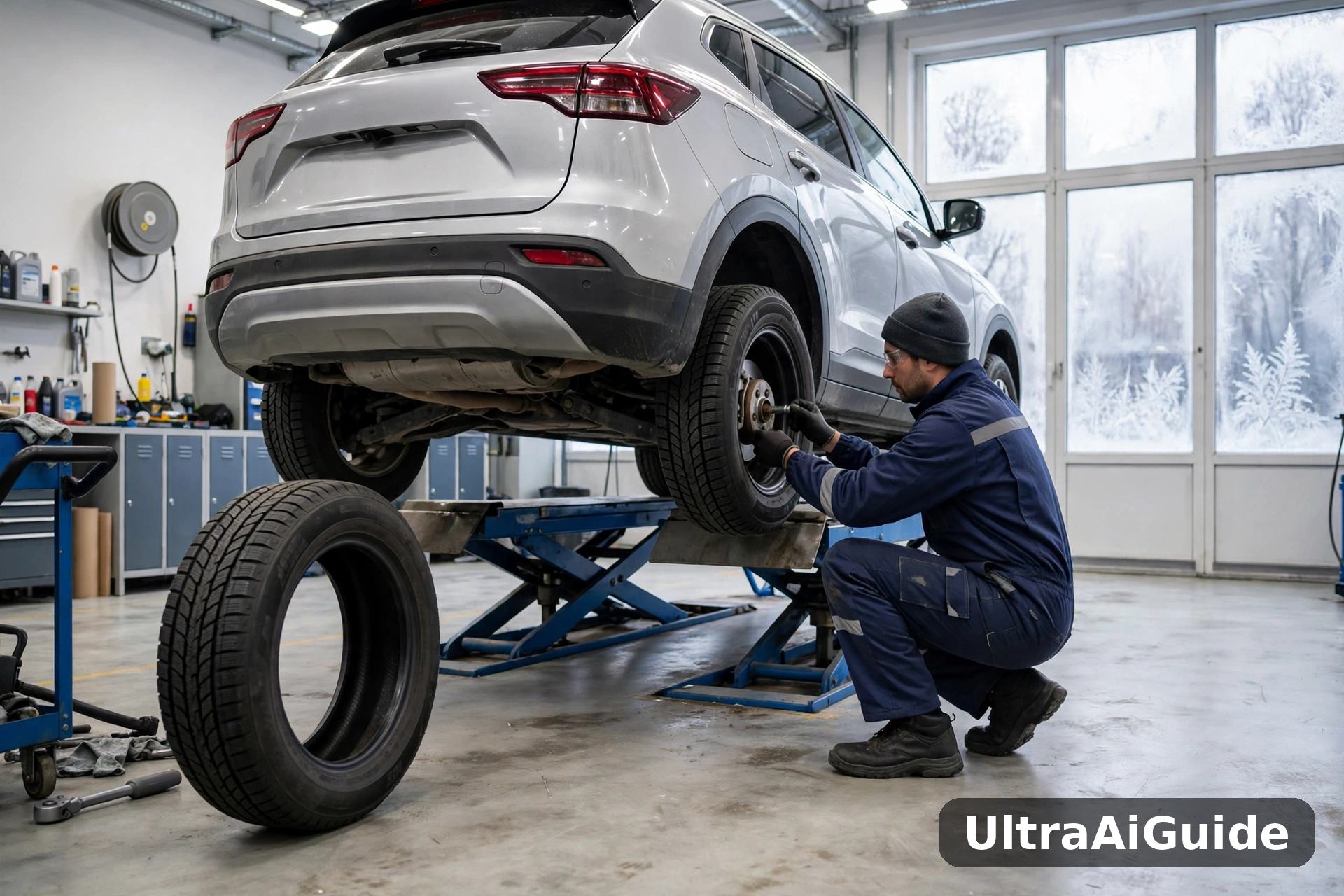
Knowing when to fit winter tyres is mostly about temperature, not waiting for snow. Their softer rubber and deeper tread keep gripping on cold, wet roads where summer tyres go stiff and vague.
This guide covers the right time to swap in the UK, how long to keep them on, the legal position at home and abroad, and how winter tyres compare with all-season alternatives.
Exact advice varies with your car and its tyres, so treat the timings here as typical practice and check your handbook and the tyre sidewall markings before you travel.
What Makes Winter Tyres Different?
Winter tyres use a rubber compound that stays flexible in the cold, plus dense sipes — tiny slits in the tread blocks — that bite into snow, ice and cold, wet tarmac.
Look for the three-peak mountain snowflake symbol on the sidewall. It shows the tyre met a recognised snow-traction standard, unlike a simple M+S marking, which is largely declared by the maker.
The Temperature Rule: Below About 7°C
The commonly cited threshold is around 7°C. Below that, summer tyre rubber hardens and grip falls away, while winter compounds are designed to keep working down to well below freezing.
That is why winter tyres help on frosty mornings and in cold rain, not just in snow. In much of the UK, average temperatures sit below that threshold for a good part of winter.
When to Fit Winter Tyres in the UK
Most UK drivers who run two sets swap in late October or November, once cold mornings become the pattern rather than the exception. Waiting for the first snowfall is leaving it late.
Fitting slightly early is the lesser mistake. Winter tyres wear a little faster in warm weather, but a week or two of mild autumn use does them no real harm.
Before the season turns, it is worth refreshing official guidance on driving in winter weather so the swap sits inside a wider winter routine.
Winter Tyres or All-Season Tyres?
All-season tyres blend both types of compound, and many models carry the snowflake symbol. For mild UK winters and modest mileage, they are a sensible one-set compromise.
Dedicated winter tyres still grip better in sustained cold, snow and ice. If you drive early mornings, live somewhere hilly or rural, or cross to the continent, the dedicated set earns its storage space.
- Winter tyres: strongest cold, snow and ice grip; need seasonal swaps and storage
- All-season tyres: a good year-round compromise; less grip at the extremes
- Summer tyres: best warm-weather grip; poor once temperatures drop below about 7°C
Are Winter Tyres a Legal Requirement?
In the UK, no. Winter tyres are not legally required at any time of year. The legal minimum is a tread depth of 1.6mm across the central three-quarters of the tread, whatever the tyre type.
Parts of Europe are stricter. Germany requires winter tyres in wintry conditions, Austria requires them through the winter months, and French mountain areas require winter tyres or chains during the season.
Rules, dates and accepted markings differ by country and change over time, so use a country-by-country guide to European winter tyre rules to confirm what your destination expects before you travel.
When to Switch Back to Summer Tyres
Swap back in spring, typically around March or April, once frosts have passed and temperatures stay consistently above roughly 7°C. There is no fixed date; watch the weather pattern, not one warm day.
Running winter tyres through summer costs you: longer braking distances on hot tarmac, faster wear and slightly worse fuel economy. The second swap matters as much as the first.
Storing the Set You Take Off
Store tyres somewhere cool, dark and dry, away from solvents and direct sunlight. On wheels, stack them flat or hang them; off wheels, stand them upright and turn them occasionally.
Use the off-season to check tread depth and tyre condition and fix any slow puncture before the next swap comes round.
Many tyre centres and dealers offer tyre hotels that store the set and refit it each season. Mark each tyre’s position before removal, so it returns to the same corner or is rotated deliberately.
Insurance and Running Costs
Fitting winter tyres does not usually count as a modification, but telling your insurer costs nothing and removes any doubt. Keep the invoice with your documents.
The real cost is the second set of wheels, or refitting fees twice a year. That is partly offset by your summer tyres lasting longer, because they rest for half the year.
Frequently Asked Questions
Can I use winter tyres all year round?
You can legally, but it is not wise. In warm weather they brake longer, wear faster and feel less precise. They are a seasonal tool, and the twice-yearly swap is part of the deal.
Do I need four winter tyres, or are two enough?
Fit four. Two winter tyres on the driven wheels alone unbalance the car, because the other end still lacks cold-weather grip. Mismatched grip between front and rear is a common cause of spins.
Will winter tyres change my speedometer reading?
Not if you keep the maker’s recommended size. Many drivers use a smaller wheel from the approved list for winter, which is fine while the overall diameter stays the same — check your handbook.
Conclusion
Fit winter tyres when cold weather settles in — around 7°C and falling — and take them off when spring properly arrives. In the UK they are a choice, not a duty; across parts of the continent they are the law.
Decide by your driving, not by the calendar alone, and confirm sizes, markings and rules in the handbook before you book the swap.