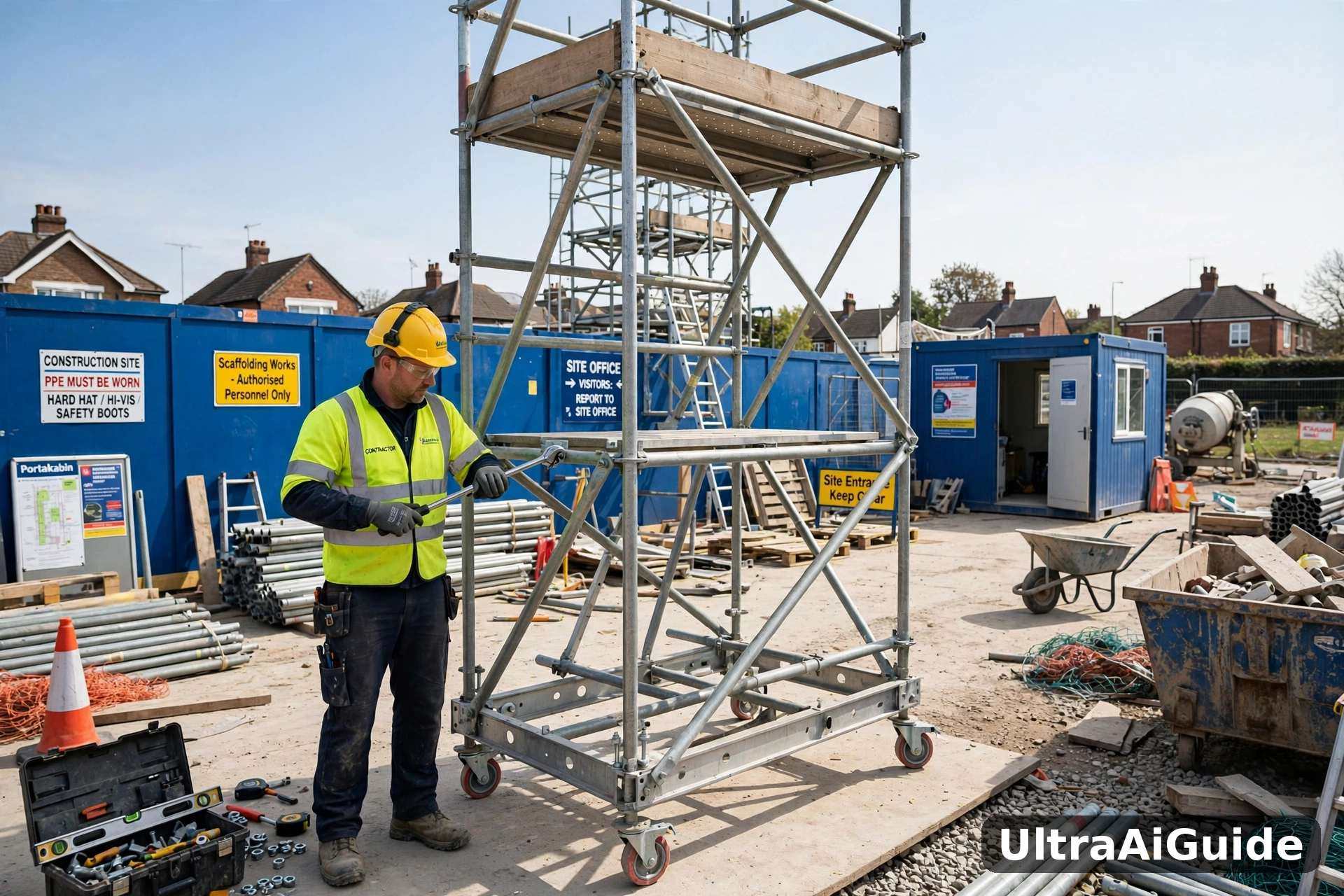
On UK sites, pasma training is the recognised way to prove you can build and use a mobile access tower safely. PASMA sets the syllabus, registered centres deliver it, and the PhotoCard you earn is accepted almost everywhere towers are used.
The course range looks confusing at first. Towers for Users, Towers for Managers, Low Level Access and combined options all sit under the same PASMA banner, but each is aimed at a different job and level of responsibility.
This guide explains what each PASMA course covers, how long it takes and who it is for, so you can book the right training first time instead of paying twice.
What Is PASMA?
PASMA is the Prefabricated Access Suppliers’ and Manufacturers’ Association, the trade body for the mobile access tower industry. It writes the training syllabus, sets the standard for course delivery and keeps the register of approved training centres.
Its courses follow the PASMA Code of Practice and current industry guidance on tower assembly methods, including through-the-trap building and advanced guardrail systems. That shared standard is why site managers treat the PhotoCard as reliable evidence of competence.
Only PASMA registered training centres can deliver the courses and issue the card. You can search the PASMA training centre finder before booking, which confirms the provider is genuinely registered.
Who Needs PASMA Training?
The Work at Height Regulations 2005 require anyone who assembles, dismantles, alters or inspects a tower to be competent, or supervised by a competent person. PASMA training is the most widely accepted way of demonstrating that competence.
That covers a long list of trades: electricians, decorators, HVAC engineers, facilities teams, warehouse staff and event crews all use towers. If a tower appears anywhere in your working week, some level of PASMA training almost certainly applies to you.
PASMA Towers for Users: The Core Course
Towers for Users is the course most people mean when they talk about PASMA training. It teaches you to assemble, use, move, alter, inspect and dismantle a mobile access tower safely, following the manufacturer’s instruction manual throughout.
It runs for one day, split between theory and a practical session where you build a tower under assessment. Many centres now let you complete the theory online beforehand, so the day itself concentrates on the hands-on build.
You must pass both a written test and a practical assessment to qualify. The HSE guidance on tower scaffolds sets out the legal duties the course is built around.
PASMA Towers for Managers
Towers for Managers is a one-day, classroom-based course for the people who plan and supervise tower work rather than build towers themselves. It covers what the law expects of managers and how to check that tower work is properly organised.
You will look at risk assessment, equipment selection, inspection regimes and the paperwork that should sit behind every tower job. The course also explains what to do when a tower has been misused or damaged.
Managers who complete it receive the same style of PASMA certificate and PhotoCard, valid for five years. Holding it makes it far easier to answer a client’s questions about how tower work on your site is controlled.
PASMA Low Level Access
Not every job needs a full tower. The Low Level Access course covers podium steps, folding platforms and other access equipment with a platform height below 2.5 metres, where falls can still cause serious injury.
It is a half-day course combining theory with a practical assessment, and it suits maintenance teams, retail staff and facilities workers. If you only ever work from podiums, this is usually the proportionate level of training.
Combined and Specialist PASMA Courses
The Combined course packs Towers for Users and Low Level Access into a single day. It is the efficient choice for operatives whose work mixes full towers with podium steps and folding platforms from one week to the next.
Beyond the core range, PASMA offers Work at Height Essentials for general awareness and advanced modules for cantilever towers, towers on stairs and linked towers. Those advanced courses build on Towers for Users rather than replacing it.
Your PASMA PhotoCard: What It Proves and How Long It Lasts
Pass the course and you receive a PASMA certificate and PhotoCard showing the categories you are qualified in. The card is valid for five years, after which you retake the course to renew rather than sitting a short refresher.
Cards are increasingly digital as well as physical, and employers can verify a card before allowing tower work. Keep your card number handy, because many sites check it at induction using the PASMA card checker.
PASMA or IPAF: Which Do You Need?
The two schemes cover different equipment. PASMA is for mobile access towers and low level access, while IPAF covers powered access such as scissor lifts and cherry pickers through its PAL Card scheme.
Plenty of operatives hold both, because real jobs mix equipment types. Check the access equipment your work actually involves before booking, and train for the kit you will genuinely stand on.
How to Choose a PASMA Training Provider
Start by confirming the centre is PASMA registered, since only registered centres can issue the genuine PhotoCard. Then check the practical details: class sizes, the condition of the training towers and whether the theory can be completed online beforehand.
Prices vary between centres and regions, so compare what is included rather than chasing the lowest figure. A slightly longer journey to a well-equipped centre usually beats a cramped course where nobody gets enough time on the tower.
Frequently Asked Questions
How long does a PASMA course take?
Towers for Users and Towers for Managers each take one day, and the Combined course also fits into a single day. Low Level Access takes half a day, while advanced modules generally take a day each.
How long is a PASMA card valid for?
Five years from the date of issue. When it expires you retake the full course for that category, because PASMA does not offer a separate refresher route for tower qualifications.
Can I do PASMA training online?
Partly. Many centres offer the theory as e-learning you complete before attending, but the practical assessment must happen in person with an instructor. A course promising a PASMA card with no practical element is not the genuine scheme.
Conclusion
PASMA training is straightforward once you match the course to the equipment and the responsibility. Users build towers, managers control the work, and low level courses cover the podiums in between, all evidenced by one recognised card.
Pick a registered centre, check the course content against your actual job and keep the five-year renewal date in your diary. Competence you can prove is what keeps both the tower and your career standing.