Introduction
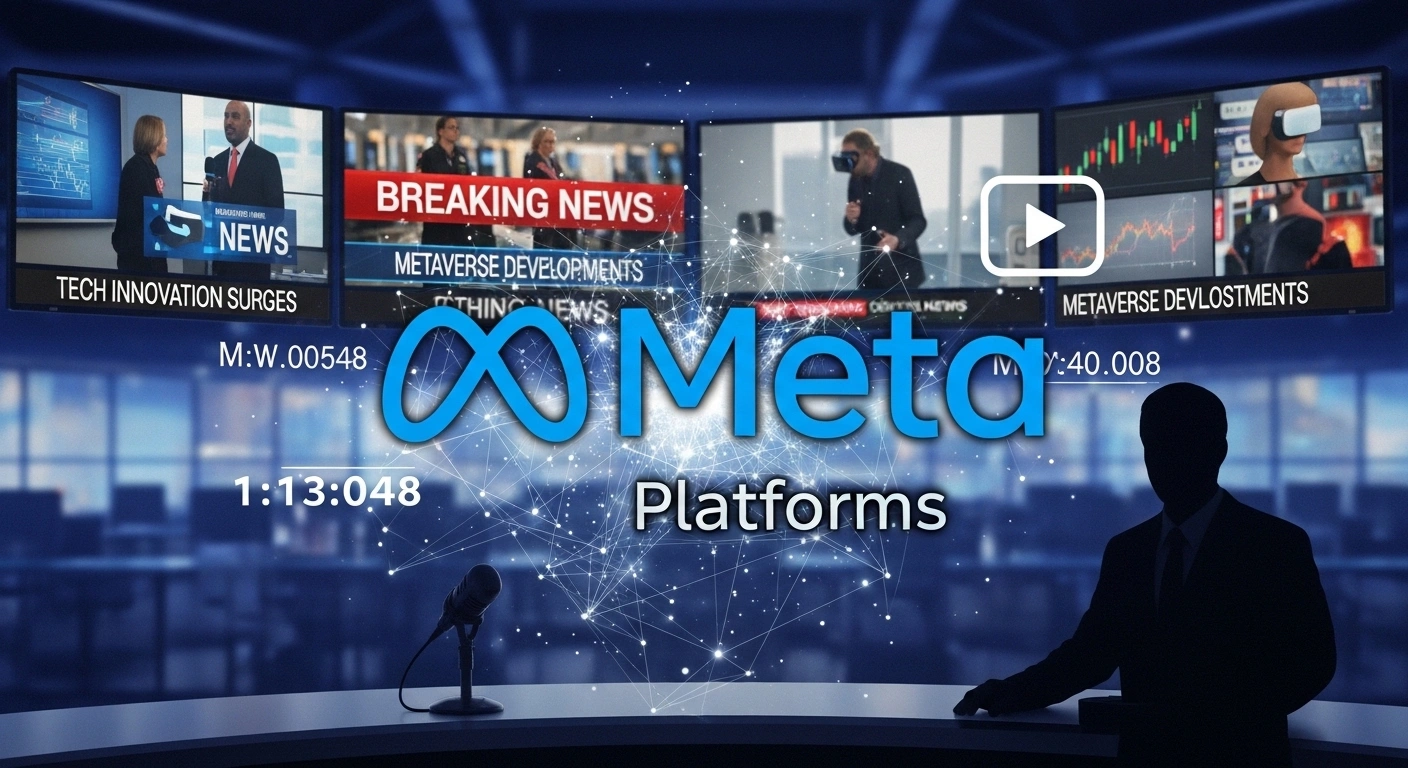
Meta AI Video represents the suite of advanced artificial intelligence frameworks developed by Meta (formerly Facebook), designed to autonomously generate, manipulate, and optimize video content. These AI systems integrate text-to-video synthesis, automatic video editing, image-to-video inference, and enhancement of visual fidelity.
Meta AI Video empowers creators to produce compelling audiovisual narratives without manual filming or traditional post-production software. By combining NLP-based prompt understanding with computer vision and audio synthesis, these AI systems enable fully automated video generation pipelines that adapt to user input in real-time.
Key capabilities include:
- Text-to-video generation: Convert descriptive natural language prompts into dynamic video sequences.
- AI-assisted video editing: Automatically trim, transition, and enhance clips using neural networks.
- Animation and cinematic creation: Produce stylized or hyperrealistic animated scenes.
- Video upscaling and enhancement: Improve resolution, color grading, and frame interpolation.
The advent of AI-powered video is reshaping creative production, lowering barriers for marketers, educators, and social media influencers alike.
History of Meta AI Video
Understanding Meta AI Video requires a historical perspective on generative video models:
Early Research: Make‑A‑Video
Meta’s initial foray into video AI began with Make-A-Video, an experimental platform capable of generating short video snippets from textual prompts. While limited in coherence and duration, it pioneered temporal frame prediction and multimodal synthesis.
Meta Movie Gen
Building on Make-A-Video, Meta released Movie Gen, a model designed to generate longer and more semantically coherent videos. Movie Gen integrated audio-visual synchronization and scene composition algorithms, marking a critical milestone for mainstream AI video generation.
Meta AI Video Editing
By mid-2025, Meta introduced AI-driven editing features within its suite. Users could now:
- Apply transitions automatically
- Adjust video timing and color
- Integrate music with scene-based analysis
Meta Vibes & Standalone Apps
In early 2026, Meta began testing Vibes, a standalone AI-powered video creation tool emphasizing user-friendly workflows for short-form content, social clips, and creative studio features.
This trajectory illustrates the innovation pipeline: research → prototype models → integrated editing tools → standalone creative applications.
How Does Meta AI Video Technology Work?
Meta AI Video combines state-of-the-art NLP, computer vision, and audio processing into multimodal AI systems capable of understanding and generating complex audiovisual sequences.
AI Model Fundamentals
At the core, Meta AI Video leverages deep neural networks trained on vast video-text datasets, enabling models to learn:
- Object dynamics and interactions
- Motion trajectories
- Scene compositions
- Temporal coherence
- Audio-visual synchronization
These models operate on transformer-based architectures, allowing contextual understanding of textual prompts alongside visual generation.
Multimodal AI Integration
Meta’s systems integrate:
- Vision models: Convolutional and attention-based networks to understand video frames
- Language models: NLP transformers for prompt comprehension and semantic mapping
- Audio processing modules: Neural audio synthesis for background, effects, and dialogue
Together, these components form a cohesive video generation pipeline.
Text-to-Video Workflow
- User Input: A prompt such as “a golden retriever surfing at sunset.”
- Semantic Parsing: NLP models extract key entities, actions, and styles.
- Frame Prediction: Generative networks predict sequential video frames.
- Refinement & Upscaling: AI ensures smooth motion, consistent objects, and high-resolution output.
Key Technical Challenges
| Challenge | Description |
| Temporal coherence | Maintaining smooth transitions across frames |
| Object consistency | Preserving the identity and appearance of entities |
| Audio synchronization | Aligning soundtracks or effects with visual motion |
| High-resolution rendering | Producing crisp, realistic video output |
Meta’s models address these challenges through attention-guided diffusion, neural rendering, and frame interpolation techniques.
Meta AI Video Tools & Features
Provides an ecosystem of AI-powered video tools:
Meta AI Video Editor
- Text-based editing: Modify scenes, audio, or transitions via prompts.
- Automatic color grading: Enhance visual aesthetics.
- Scene suggestions: AI proposes edits based on context.
- AI transitions: Generate smooth scene changes automatically.
Example:
Prompt: “Make this clip 7 seconds longer with a cinematic fade.”
AI Result: Adjusted duration, fade, and color grading automatically.
Meta Movie Gen
Movie Gen is the central generative model, capable of turning text, images, or audio cues into full videos.
Meta Vibes Standalone Tool
Aimed at creative users, Vibes provides:
- AI video studio interface
- Storyboarding from text prompts
- Music integration and synchronization
- Social media-ready exports
Presets & Templates
Meta includes AI-driven editing templates, visual styles, and scene presets to accelerate production.
Meta AI Video Editor Explained
The Meta AI Video Editor simplifies video editing through multimodal AI.
Key Features
- Text-driven scene modification
- Automatic beat and tempo adjustment
- Color and lighting correction
- AI-suggested visual enhancements
Example Workflow
User Prompt: “Switch to ambient music and soften lighting.”
AI Response: Updates video pacing, music overlay, and scene tone.
Comparison: Traditional vs AI Editing
| Feature | Traditional | Meta AI Editor |
| Skill Required | High | Low |
| Editing Time | Hours | Minutes |
| AI Assistance | None | Full |
| Presets | Limited | Extensive AI-powered |
Meta Movie Gen Model: Deep Dive
Meta Movie Gen represents the state-of-the-art generative video model.
Functionality
- Converts textual prompts, images, and audio into entire video sequences
- Adjusts motion, lighting, and style dynamically
- Uses temporal attention networks for coherence
Example:
Prompt: “A jazz pianist playing under neon lights at 30fps.”
AI Output: Smooth video, realistic lighting, synced background jazz track.
Innovations
- Learned object interactions
- Scene dynamics modeling
- Audio-visual alignment
- Multimodal transformer architecture
Movie Gen simulates contextual comprehension, not mere frame assembly.
Meta Vibes & Standalone Video Creation
Emphasizes creative autonomy:
- AI video studio for short films and social media clips
- Automatic storyboard generation from text prompts
- Music, text overlays, and scene adjustments integrated
- Simplified export for multiple platforms
Vibes demonstrates Meta’s commitment to making AI accessible to mainstream creators.
Meta AI Video vs Competitors
| Feature | Meta AI Video | OpenAI Sora | Google Veo | Runway |
| Text-to-Video | ✔ | ✔ | Limited | ✔ |
| Audio Sync | ✔ | Developing | ✔ | ✔ |
| Editing Presets | Extensive AI | Prompt-only | Basic | Advanced |
| Standalone App | Vibes | Web/API | Cloud-only | Plugins |
| Platform Integration | Facebook, IG | External | Android/Cloud | Creative workflows |
Importance of Comparison
Search terms like:
- “Meta AI video vs OpenAI Sora”
- “Meta Movie Gen review”
- “AI video creation tools comparison”
…drive high SEO visibility.
Ethics, Copyright & Safety Concerns
AI-generated video presents legal and moral complexities.
Deepfakes & Misinformation
AI can produce realistic but synthetic video. Safety practices must include:
- Detection algorithms
- Age-appropriate usage
- Clear labeling
Copyright Considerations
Questions include:
- Does AI reuse copyrighted clips?
- Who owns AI-generated content?
- Music and asset rights compliance
Privacy Concerns
Integration with Facebook/Instagram raises data privacy implications.
Creators must ensure user consent and ethical usage.
Practical Use Cases & Examples
Content Creation
Influencers generate video without filming:
- Travel vlogs from text prompts
- Product advertisements from scripts
Marketing
Brands can rapidly produce:
- Promotional videos
- Ad variations for A/B testing
Education
Teachers produce:
- Animated tutorials
- Educational summaries
Social Media
AI enables:
- Trendy short clips
- Platform-optimized video content
Future Predictions
Meta AI Video Trends 2026–2027:
- Longer and fully cinematic video generation
- Real-time AI editing
- Integrated AI music scoring
- Standalone creative studios
- Cross-platform deployment
AI video will soon be ubiquitous for creators, educators, and marketers.
SEO Tips for Creating Content About Meta AI Video
Keywords to Use
- Meta AI video generation
- Meta AI video editor
- Meta Movie Gen
- Meta Vibes AI tools
- AI video creation 2026
- Meta AI editing features
Content Structuring
- Use H1, H2, H3 for headings
- Bullet lists, tables, and examples for readability
- Include FAQ sections for Google snippet optimization
FAQs
A: AI-powered video generation and editing tools from Meta that convert text, images, and audio into video content.
A: It uses multimodal AI to combine NLP, computer vision, and audio synthesis to generate coherent video from prompts.
A: Meta’s advanced AI model for generating videos from text, images, and audio cues, with temporal coherence and style control.
A: Meta AI Video Editor allows text-based editing and automatic enhancement without traditional skills.
A: Copyright depends on training data, output usage, and regional laws, which are evolving for AI-generated content.
A: Deepfakes, copyright infringement, privacy risks, and misinformation are major concerns.
Conclusion
Meta AI video news highlights how rapidly artificial intelligence is transforming video creation, editing, and storytelling. With innovations like Meta Movie Gen and AI-powered editing tools, content production is becoming faster, smarter, and more accessible than ever before.
As Meta continues to push the Boundaries of generative video, creators, marketers, and businesses now have powerful tools to turn ideas into high-quality visuals with minimal effort. However, with these advancements come important concerns around ethics, copyright, and misinformation that must be addressed responsibly.
Looking ahead, Meta AI video technology is set to redefine the future of digital content—making AI-driven video creation a standard part of everyday creativity.