A Shoyoroll Batch 60 can look familiar even if you’ve never seen one in person. It has the clean lines of a classic Brazilian jiu-jitsu gi, with Shoyoroll and VA branding that ties it to the RVCA collaboration. The design is easy to place once you know the details. Buying one takes more care, especially if you’re comparing used sets that have spent years in different training and laundry routines.
Batch 60, also known as RVCA V2 or RVCA II, came out on September 23, 2016. Its jacket uses cotton pearl weave, and its pants use cotton twill. The release is documented in white, black, and blue, with blue listed as an UberGUMA exclusive. Those details give you a starting point. The color, measurements, and condition of the specific set will tell you whether it makes sense for your collection or your next class.
How the Shoyoroll and RVCA project came together
Batch 60 was the second Shoyoroll and RVCA project. The original release description traces it to Shoyoroll founder Bear Quitugua and RVCA founder PM Tenore, with the Mendes brothers featured in the project. If you’ve followed the Mendes brothers or remember the gear from that period, the collaboration gives the gi a connection to an era of sport jiu-jitsu that a current uniform can’t recreate.
The name can cause confusion in listings. Shoyoroll’s earlier RVCA collaboration is Batch 38. Sellers may use RVCA II, RVCA V2, or SYR x RVCA to describe Batch 60, and the broad collaboration name can appear on other gis as well. If the listing title just says Shoyoroll RVCA, ask the seller which batch it is and request pictures of both pieces. That simple step can save you from comparing the price of one release with the condition of another.
There’s also an appeal for someone who knows little about the release history. The design gives each brand room to be seen without filling every panel with graphics. If you like a plain uniform but still want a gi with a distinct look, Batch 60 sits in that space. The appeal comes down to the labels, the balance of the logos, and how the whole set looks when worn together.
What to know about the white, black, and blue versions
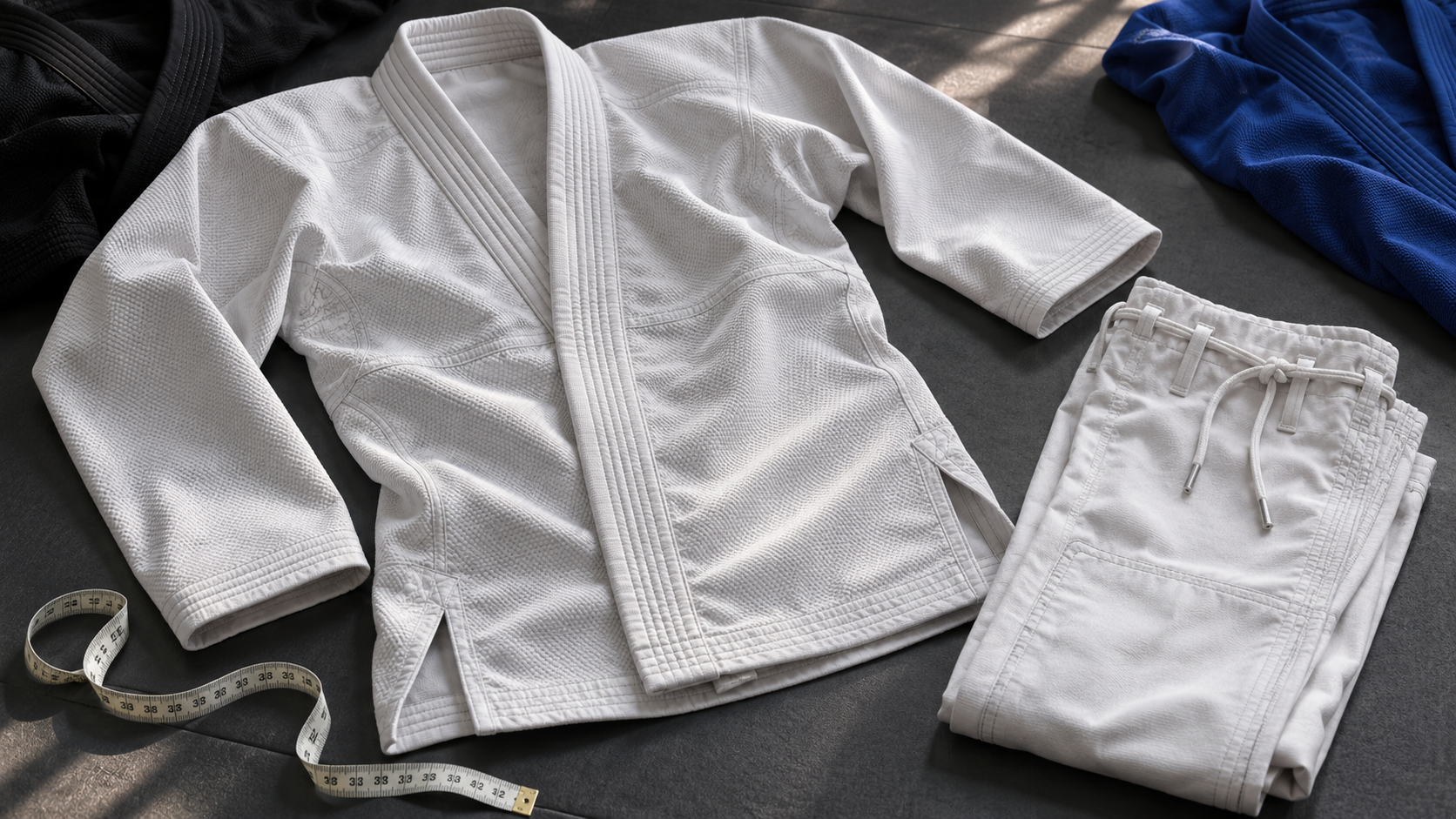
White is the easiest color to picture as a regular training gi. It can also reveal the wear you’ll want to inspect before buying. Look at the inside of the collar, the ends of the sleeves, and the knees. Ask for daylight photos of those spots. A soft shadow in an indoor photo can hide yellowing, while harsh light can make a clean panel look uneven.
On the black version, spend more time comparing the color across the jacket and pants. A jacket can fade at the shoulders and lapels while the pants stay darker. Slight differences may be fine for a set you plan to train in. If you want a clean matching set to keep, check both pieces side by side in the same light and look for areas where repeated washing may have softened the trim or dulled the cloth.
The blue version has a different release history. GiDatabase lists it as an UberGUMA exclusive. If blue is the reason you started looking, make sure the listing shows the jacket and pants together and that the seller identifies both as part of the set. Take a moment to compare the shade and details with archive photos. The color alone can’t tell you which batch a gi came from or how the two pieces ended up together.
How the pearl weave jacket and twill pants feel
Cotton pearl weave has a raised texture. On a gi jacket, it gives the lapel and sleeves a different feel from the flatter cloth you see on the pants. A product photo can show the weave, but how an older jacket drapes depends in part on its wash history. A jacket that has softened over time may feel good in class. Inspect the seams and cuffs as closely as you check the feel of the body fabric.
Cotton twill has a diagonal pattern. If you’re used to ripstop pants, look for the difference in texture and check how the twill bends at the knees. Two pairs of pants can feel very different even when both are cotton. The cut of the leg, the size of the knee panels, and the amount of room in the seat affect how easy it is to squat, sit on your heels, or bring your knees in when you play guard.
The archived specs identify the fabric types. For a weight comparison, ask the seller to put the jacket and pants on a scale together. That gives you a number you can compare with a gi you already own. It’s especially handy if you travel with limited bag space or want to understand how much the uniform adds at a gi weigh-in.
How to check the fit of a used Batch 60
Start with a gi that fits you after washing. Lay the jacket flat and measure the chest width across the underarms, the span from cuff to cuff, and the back length from the collar seam to the hem. On the pants, check the waist laid flat, the inseam, and the length from the waistband to the bottom of the leg. Ask the seller to measure from the same points and keep the fabric flat without pulling it tight.
A size tag tells you how the gi was labeled when it left the factory. The numbers from a tape measure tell you what you’ll be wearing now. One owner may have hung the gi to dry after every wash. Another may have used a hot dryer to take length out of the sleeves. If you’re between sizes, compare the chest and sleeve measurements on their own so you can see whether you’d gain the extra reach at the cost of too much room in the body.
If you can try the gi on, tie your belt and reach forward as if you’re taking a collar grip. Check whether the jacket binds across your shoulders and whether the cuffs sit where you expect. Then squat and sit back on your heels. Pay attention to the seat and knees of the pants. If they pull as soon as you bend, ask yourself how they’ll feel after several rounds in which you spend much of the time on the floor.
What photos to ask for before buying
Ask for a full front and back photo of the jacket and pants. Follow up with close-ups of the labels, logos, and the places that take the most wear. On the jacket, those include the collar edge, sleeve cuffs, and seams under the arms. On the pants, start with the knees, the crotch seam, the hems, and the drawstring channel. A small repair can be reasonable on a training gi if the seller describes it and the price makes sense.
Compare the photos with references for the same colorway. Look at the details together, including the placement of the logos and the way the labels and trim appear. A receipt or a clear purchase history can help you assess provenance. Ask whether the seller added or removed any patches, and check that the terms cover an item that arrives in a different condition than described. These checks matter most when the listing price reflects collector value.
If you see claims like unworn or worn once, ask whether the gi has been washed, altered, or stored for a long time. A set can have little mat time and still have marks from storage. Get the total price with shipping and fees before you decide. If you want a uniform for three classes a week, compare that total with a current gi in a cut you already trust.
Should you train or compete in it?
A sound Batch 60 can still be a gi you reach for in class. Before you put an older set into rotation, check that the cloth and seams can take another round of regular use. If the collar is separating or the fabric has thinned around a seam, factor that into how often you expect to wear it. For a set you want to preserve, decide what level of wear you’re comfortable adding.
For competition, read the current uniform requirements for your event. Checks can cover the color, the position of patches and embroidery, and how the jacket and pants fit. A black or white Batch 60 still needs to meet the organizer’s rules. If you want to use the blue version, confirm that its shade is accepted. Try on the set after washing and weigh yourself in the required uniform if your event uses a gi weigh-in.
Is Shoyoroll Batch 60 worth buying?
If you like the RVCA collaboration, the Mendes brothers connection, or the way the two brands share space on a simple gi, Batch 60 has a clear reason to be on your list. Choose the color you’ll enjoy owning, then judge the set in front of you. A well-documented pair with sound seams and measurements that suit you can be worth more to you than a cleaner listing in the wrong size.
When you compare a Batch 60 with other gis at Strikers BJJ, start with the full release name, the original jacket and pants pairing, and the condition you can see for yourself. A collector may care most about a complete set in a particular color. A regular grappler may care most about whether the shoulders feel free and the pants hold up in class. Either way, you’ll make a better choice when you know what you want from this particular gi.