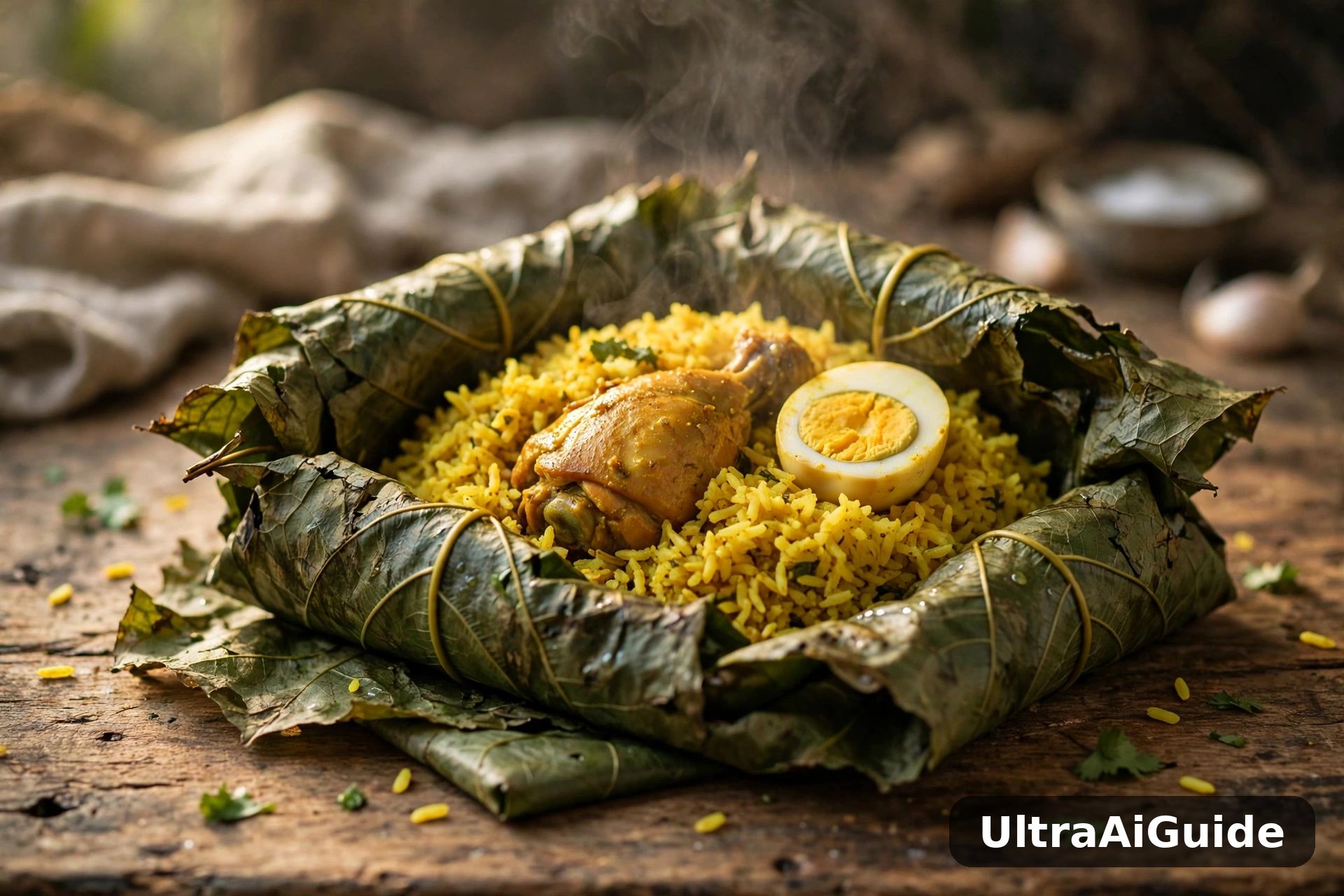
Searching for the best juane peruano near me is the fastest way to find this leaf-wrapped Amazonian classic without phoning half the Peruvian restaurants in town.
Juane rarely sits on standard menus, so a targeted search saves real time. This guide explains what the dish is, where it hides, and how to judge a good one.
You will also learn the main variations, typical price ranges, delivery tips, and the questions worth asking before you order.
Introduction
The best juane peruano near me search works because juane is a regional specialty, not a mainstream menu item. Most Peruvian restaurants lead with ceviche and lomo saltado instead.
Juane comes from Peru’s Amazon region, where seasoned rice, chicken, egg, and olives are wrapped in bijao leaves and steamed. The result is fragrant, filling, and portable.
Some kitchens serve it year-round, while others cook it mainly around festivals. Knowing which is which is the difference between a great lunch and a wasted trip.
What Is Juane? Understanding This Traditional Peruvian Dish
Juane is a traditional dish from the Peruvian Amazon, especially the San Martín region. It pairs seasoned rice with chicken, egg, and spices inside a leaf parcel. The mixture is wrapped in large bijao leaves and cooked until the flavours bind together, and the rounded bundle is easy to recognise on a plate.
Families prepare juane for everyday meals, gatherings, and celebrations. Chicken is the common filling, but recipes differ between cooks, towns, and households.
The leaf wrapping is functional, not decorative. It holds the rice together during cooking and perfumes the parcel with a gentle, earthy aroma. Many people love juane because it is satisfying and convenient to serve: a single parcel is a complete meal that travels well.
How to Find the Best Juane Near Me?
Start with the right search terms. Look for Peruvian restaurants first, then try phrases like Amazonian food near me or chicken juane near me.
Smaller regional specialists often appear under those narrower searches. A quick menu check or phone call then confirms whether juane is actually served.
Search for Peruvian Restaurants Near You
Peruvian restaurants are the sensible starting point, since some serve dishes from several regions. Not all of them cook Amazonian food, though.
Check the menu before travelling. A restaurant focused on coastal dishes may never offer juane at all.
Look for Amazonian or Regional Peruvian Cuisine
Kitchens that highlight Amazonian cooking are far more likely to prepare juane properly. Their menus usually mention regional specialties and traditional methods.
Look for phrases like comida selvática or Amazonian specialties. Those signals suggest the kitchen knows the dish’s home territory.
Use Google Maps and Local Restaurant Directories
Maps and directories help you compare distance, opening hours, photographs, and recent reviews in one place. They narrow a long list quickly.
Read recent reviews rather than trusting the overall rating alone. Dish-specific comments reveal far more about juane quality.
Check Menus and Contact Restaurants
Some restaurants cook juane only on certain days or during festivals. The online menu may be weeks out of date.
Call ahead and ask whether juane is available, what filling it uses, and what it costs. Two minutes on the phone saves a disappointing journey.
What Makes a Juane Authentic and Delicious?
A delicious juane has well-seasoned rice, a satisfying filling, and a clean, fragrant aroma. The elements should work together rather than compete.
Fresh preparation matters as much as the recipe. A parcel cooked hours ago and reheated badly loses its texture and perfume.
Fresh, Flavorful and Properly Seasoned Rice
Rice is the main body of most juane recipes. It should taste balanced and hold together without turning mushy.
Turmeric and Amazonian herbs typically give the rice its golden colour and character. Underseasoned rice is the most common fault in a weak juane.
Tender Chicken and Well-Balanced Fillings
Chicken should be properly cooked and still tender. Egg and olives add richness and small bursts of saltiness.
The filling should complement the rice, not overwhelm it. A good parcel tastes complete in every bite.
Traditional Bijao Leaf Wrapping
Bijao leaves are the traditional wrapper. They contain the ingredients during cooking and give the dish its distinctive presentation.
The leaves are not eaten. You open the parcel and eat the rice and filling inside.
Aroma, Cooking and Balance
A pleasant, warm aroma when the parcel opens is a reliable sign of careful cooking. So is rice that steams gently rather than sitting dry.
Balance matters too. Juane should feel rich but not greasy, and seasoned but not aggressively salty.
Popular Types of Juane You May Find Near You
Juane comes in several variations, and the version near you may differ from another town’s. Knowing the types helps you order with confidence.
Traditional Chicken Juane
Chicken juane is the best-known version. Seasoned rice, chicken, egg, and olives are wrapped in leaves and cooked together.
It is the safest first order if you have never tried the dish. Most juane sold abroad follows this pattern.
Juane Made With Hen or Other Meats
Some recipes use hen, which gives a deeper flavour and firmer texture. Others use different meats according to local custom.
Ask about the filling if you have a preference. The protein changes both taste and cooking time.
Regional Amazonian Juane Variations
Recipes shift across Amazonian communities. Cooks vary the herbs, the rice preparation, and the filling with local ingredients.
There is also juane de yuca, made with grated cassava instead of rice. It is denser and worth trying when offered.
Modern Restaurant Interpretations
Some restaurants adjust portion sizes, plating, or ingredients for local tastes. The leaf-wrapped idea usually survives intact.
If authenticity matters, ask how the kitchen prepares its version. A confident, specific answer is a good sign.
How Juane Is Made, Step by Step
Understanding the method helps you judge what arrives at your table. The process is simple, but each step affects the final flavour.
- The rice is seasoned, often with turmeric, garlic, and herbs, then partly cooked so it finishes inside the parcel.
- Chicken pieces are seasoned and lightly browned or marinated, and eggs are hard-boiled and halved.
- A portion of rice is placed on softened bijao leaves with chicken, egg, and olives, then folded and tied into a bundle.
- The parcels are steamed or boiled until the rice is tender and the chicken cooked through.
- After a short rest, the parcel is opened at the table or counter, releasing the leaf aroma.
A kitchen that can describe this process clearly almost certainly makes its juane from scratch.
How to Choose the Best Juane Restaurant?
Choosing well takes more than picking the nearest map result. Food quality, feedback, hygiene, price, and convenience all count.
Read Customer Reviews That Mention Juane
Look for recent reviews that discuss juane itself. Comments on flavour, freshness, and portion size beat general praise.
Several detailed reviews pointing the same way are a strong signal. One glowing comment is not.
Check Food Photos and Menu Descriptions
Photographs show serving size and presentation, while menu descriptions list ingredients. Both help you set expectations.
Remember that online pictures may be old. If anything is unclear, ask the restaurant directly.
Compare Prices and Portion Sizes
A higher price does not automatically mean better food. Compare portion size, filling, and what else is included.
Check whether the serving suits one person or is meant for sharing. That changes the value calculation completely.
Consider Freshness and Hygiene
Choose places with safe food-handling practices and clear preparation information. Chicken and eggs must be cooked properly.
Prepared parcels should be stored safely and served hot. Trust your instincts if a counter looks neglected.
Check Service and Convenience
Opening hours, waiting times, and delivery availability shape the experience too. A slightly longer trip can be worth it.
A restaurant with dish-specific praise and clear menu information usually beats the closest option.
Juane Prices, Portion Sizes and Value for Money
Prices vary by city, restaurant, ingredients, and serving size. As a rough guide, a single juane in the US or UK typically falls in a mid-range band for a main course, and prices vary widely.
Check whether the listed price covers juane alone or includes sides, sauces, or a drink. Delivery fees and online-ordering charges can lift the final total. A generously filled parcel can be a full meal on its own, while a smaller one suits a light lunch or a shared starter.
For groups, ask about family portions or multi-serving deals, since buying several parcels together is often better value. Because menus change, avoid relying on old photographs or outdated reviews for prices: check the current menu or call the restaurant before ordering.
Can You Order Juane for Delivery or Takeaway?
Yes, where a nearby restaurant offers it. Availability depends on the day’s menu and whether the kitchen cooked juane that day. Start with the restaurant’s own website or ordering page, and use delivery platforms as the backup if the dish appears there.
Leaf-wrapped juane travels better than most rice dishes, because the parcel protects the rice and keeps the portion intact. Still, check the estimated arrival time and packaging before ordering, since a long, slow delivery can dry the rice out.
For takeaway, ask whether your parcel can be collected freshly cooked. Fresh collection beats a parcel that sat under a heat lamp.
How to Store and Reheat Leftover Juane
Cooked rice needs careful handling, so treat leftovers seriously. The same rules apply whether your juane came from a restaurant or your own kitchen.
food safety guidance for cooked rice
Refrigerate leftovers within 2 hours of serving, in a clean covered container, and eat refrigerated juane within 3 to 4 days. Reheat until steaming hot throughout, reaching 165°F (74°C); a splash of water before microwaving helps the rice stay moist.
Do not reheat juane more than once, and if a parcel sat at room temperature for hours, throw it away rather than risk it. Freezing works for up to a couple of months, still wrapped; defrost in the fridge overnight before reheating.
What to Know Before Trying Juane for the First Time?
Expect a savoury, fragrant rice parcel rather than anything spicy by default. The filling depends on the recipe, so ask first: chicken, egg, olives, herbs, and seasonings are common, but not every version contains all of them.
The outer leaves are a wrapper, not food, so open them carefully and tip the rice and filling onto your plate. If you have an allergy, say so clearly and ask about cross-contact in the kitchen; never assume a traditional recipe suits your diet.
Heat levels vary with accompanying sauces more than the parcel itself. Ask for mild if you prefer gentle seasoning.
Why is Juane associated with the Festival of San Juan?
Juane is closely tied to the Festival of San Juan, celebrated on June 24 across Peru’s Amazonian regions, where food, music, and gatherings define the day. The dish is named for the festival’s saint, and its portable parcel shape suits outdoor celebrations, so families prepare large batches to share.
Recipes pass between generations during these gatherings, and the festival keeps regional ingredients and techniques alive. June is also prime hunting season for juane abroad, when Peruvian community events and restaurants often run special menus around the date.
Outside June, availability depends on the kitchen. Some serve juane weekly, others only when pre-ordered.
What to Serve Alongside Juane
A classic Amazonian pairing is a slice of fried ripe plantain, which adds sweetness against the savoury rice. It appears on many regional menus.
A simple onion and chilli salsa, like salsa criolla or a mild ají sauce, brightens the parcel. Ask for it on the side if heat worries you.
For drinks, chicha morada or a plain soft drink keeps the meal balanced. Heavy sides are unnecessary, since the parcel is already filling.
Juane Compared With Other Peruvian Dishes
Peruvian cooking spans bright marinated fish, stir-fries, and fried-rice dishes. Juane stands apart through its leaf-wrapped rice parcel.
| Dish | Main ingredients or style | Key difference |
|---|---|---|
| Juane | Seasoned rice, often chicken and egg | Traditionally leaf-wrapped |
| Ceviche | Fish or seafood with citrus | Fresh, citrus-marinated dish |
| Lomo saltado | Beef, vegetables, and fries | Stir-fried dish |
| Tacacho con cecina | Plantain and smoked pork | Classic Amazonian combination |
| Arroz chaufa | Stir-fried rice | Peruvian-Chinese influence |
Ceviche tastes bright and citrusy, while lomo saltado arrives hot from the wok. Tacacho con cecina is juane’s Amazonian neighbour, built on plantain and pork.
If you enjoy hearty rice dishes, juane is an easy recommendation. Its wrapping, aroma, and festival roots make it genuinely distinctive.
Common Mistakes When Searching for Juane
The biggest mistake is assuming every Peruvian restaurant serves it. Many focus on coastal cooking and have never offered Amazonian dishes.
Another is trusting an old menu photograph. Juane appears and disappears with festivals, staffing, and ingredient supply.
Finally, do not skip the phone call. Asking about the day’s availability takes a minute and prevents most disappointments.
Frequently Asked Questions
1. Is juane a good option for lunch?
Yes. A parcel combines rice, protein, and egg in one serving, so it fills most appetites comfortably at midday.
2. Can I find a vegetarian juane?
Sometimes. Traditional recipes usually include chicken or hen, so ask whether a meat-free version exists and how the rice is seasoned.
3. How should leftover juane be stored?
Refrigerate it promptly in a covered container and eat it within 3 to 4 days. Reheat once, until steaming hot throughout.
4. Can juane be suitable for children?
Often, yes. Check the seasoning level, portion size, and any allergens like egg before serving it to a child.
5. What should I ask when ordering juane for a group?
Ask about serving sizes, fillings, advance-order requirements, and total price. Confirm the pickup or delivery time so everything arrives together.
Conclusion
Finding the best juane peruano near me gets easier once you know the pattern. Target Peruvian and Amazonian kitchens, check current menus, and call before you travel.
Judge the rice, the filling, and the kitchen’s knowledge of the dish. Compare portion and price rather than chasing the nearest result.
Above all, treat juane as an introduction to Amazonian food culture. Choose freshness and care, and the parcel will reward you.