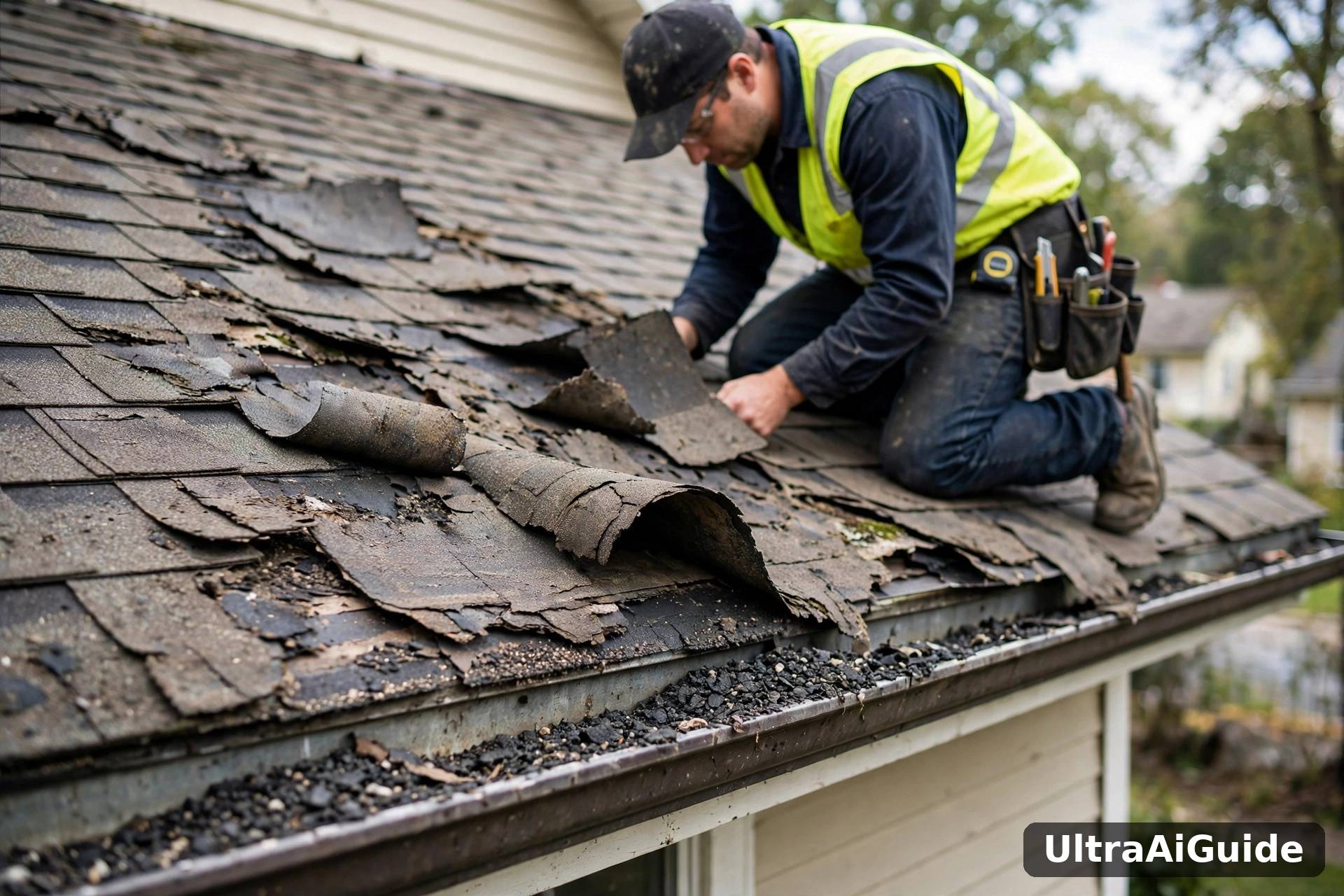
Learning to look beyond missing shingles is what separates a cheap, lasting fix from money spent patching a roof that is quietly failing as a system.
From the driveway, most roofs look fine until the day they do not. Underneath the surface, moisture, age, and storm wear decide whether a repair still makes sense or the whole assembly is giving up.
This guide shows how to read the warning signs — on the surface, in the attic, and across your repair history — before you pay for another patch.
Surface damage only tells part of the story
A missing shingle after a windy night looks like an easy fix, and sometimes it is. The trouble starts when visible wear hides moisture intrusion working its way below the surface.
Your roof is a system made of shingles, underlayment, flashing, decking, vents, and fasteners. If one part keeps failing, the damage rarely stays isolated to that spot. Look for patterns instead of single defects:
- Granules collecting in gutters and at downspout ends
- Leaks that keep returning near the same chimney or valley
- Soft or spongy spots along the roof deck
- Curling or cracking across whole slopes, not just single tabs
Clusters like these point to aging materials rather than bad luck, and patching cluster after cluster becomes a short-term bandage with a poor return.
Storm damage can push a repairable roof past the tipping point
Hail bruising, lifted tabs, exposed fiberglass mat, and creased shingles all affect performance in ways that are easy to miss from the ground. A roof may survive one storm and still become vulnerable during the next, because the protective outer layer has already been compromised.
Wind damage is especially tricky. When shingles lose their seal strip bond, they can look mostly intact while allowing water to work underneath during the next storm cycle. how to document storm damage for an insurance claim
In climates that mix snow loads, freeze-thaw stress, and summer storm cells in the same year, that hidden damage builds fast. Materials that might last decades elsewhere can wear out noticeably sooner under that cycle.
Age matters more than most homeowners realize
Many homeowners focus on what the roof looks like this month. Contractors often look first at age, material type, and ventilation history.
Standard asphalt shingles usually last around 20 to 30 years, though climate, installation quality, and attic airflow can shorten that range. Architectural shingles often perform longer, but not indefinitely.
If your roof is pushing past its expected service life, each new repair carries more risk. Sealants dry out, flashing fatigues after years of expansion and contraction, and nail pops become more common. Ask for a remaining-life assessment, not just a repair quote.
Leaks are not equal, and recurring leaks are the real warning sign
One leak around a vent boot may be a straightforward repair. Three leaks in different roof planes usually tell a different story, because recurring leaks often mean the water-shedding system is losing integrity across valleys, skylights, dormers, and masonry transitions.
Pay attention to timing. If leaks appear after wind-driven rain but not during normal showers, flashing details or underlayment failures may be involved. If leaks show up after ice buildup in winter, attic insulation and ventilation may be part of the problem too. how professionals trace a roof leak to its source
This is where a thorough inspection matters. You want someone checking decking condition, flashing laps, vent penetrations, and attic humidity levels, not just replacing a few shingles and leaving.
Your attic often gives better clues than your curb appeal
A roof inspection should include the attic whenever possible. You can learn a lot there without tearing anything off:
- Daylight coming through the boards
- Damp insulation or mold growth on the sheathing
- Rusted nail tips poking through the deck
- A musty smell that lingers after rain
Poor ventilation accelerates shingle aging from below. Heat buildup can bake roofing materials in summer, while trapped moisture in colder months can rot decking and reduce insulation performance. attic ventilation problems and their signs
That means a roof problem can quietly turn into an indoor air quality issue and an energy efficiency issue at the same time. If your attic shows chronic moisture and your roof is older, replacing isolated exterior materials may not fix the source.
Repair costs add up faster than people expect
A repair bill on its own can seem manageable. The real issue is cumulative spend, once leak tracing, drywall patching, ceiling paint, insulation replacement, and emergency tarping are added to the roofing invoices.
It helps to think in terms of cost per remaining year. Spending a few hundred dollars on a targeted repair for a relatively new roof can be smart. Spending thousands on an aging roof with widespread wear often produces weak value, because another failure may arrive soon.
Ask contractors to separate immediate safety issues from long-term recommendations. A temporary repair may still be worth doing if you need time for budgeting, but you should know whether it is buying six months or five years.
Material matching and code upgrades can change the equation
Older roofs create a practical problem many homeowners do not anticipate: matching existing materials becomes difficult. Manufacturers discontinue colors and profiles, and sun exposure fades shingles unevenly, so a small repair can leave a patchwork look that hurts curb appeal.
Building codes can also affect what happens next. Replacing a large enough section can trigger updates to underlayment, ice barrier placement, flashing details, or ventilation requirements. Insurance carriers may also want more documentation after storm losses or repeated claims.
A contractor should explain these variables clearly before work starts. If code-related upgrades apply and your current roof already has broad wear, a larger project may offer cleaner aesthetics and stronger weather protection than piecemeal repairs.
A Ground-Level Inspection You Can Do in Twenty Minutes
You do not need a ladder to gather useful evidence. Walk the property after rain and after wind, phone camera in hand:
- Photograph bare spots, lifted tabs, and any shingles lying in the yard
- Check gutters and downspout ends for granule buildup
- Sight along the ridge for dips or an uneven roofline
- Note ceiling stains indoors, and whether they grow after storms
- Look in the attic for damp insulation and daylight at the deck
Dated photos from a few checks a year make patterns obvious, and they are exactly what a good contractor, or an insurer, will ask to see.
Repair or Replace: A Simple Decision Checklist
Neither answer fits every roof. Weigh these factors together instead of deciding from the latest leak alone:
| Factor | Repair usually wins | Replacement usually wins |
|---|---|---|
| Age | Well inside expected service life | At or past expected service life |
| Damage pattern | One area, one clear cause | Several planes, several causes |
| Attic condition | Dry decking and insulation | Moisture, mold, or soft decking |
| Repair history | First or second call-out | Repeated call-outs within two years |
| Plans for the home | Staying, with a sound roof | Selling soon, inspections ahead |
If most of your answers land in the right-hand column, price the full project before funding another repair.
The smartest decision balances timing, risk, and resale value
You do not need to wait for a dramatic leak pouring into your living room. The better move is to act when evidence starts pointing in one direction: an older roof, leaks in multiple places, widespread shingle fatigue, or moisture issues in the attic.
That does not mean every problem demands a full tear-off. Newer roofs with localized damage still respond well to skilled repairs. The key is getting an honest assessment based on system condition, not just a fast quote.
If you plan to sell within a few years, roof condition also affects buyer confidence, inspection results, and negotiating power. A solid roof is not flashy, but it shapes how secure the whole house feels, and buyers notice that immediately.
Frequently Asked Questions
How long do asphalt shingles usually last?
Standard asphalt shingles typically last around 20 to 30 years. Climate, installation quality, and attic ventilation can shorten that range, while architectural shingles often last longer.
Can one missing shingle really cause a leak?
It can. A gap exposes the underlayment and decking to direct rain and sun, and wind can lift neighboring tabs. One gap is a simple repair; gaps appearing in clusters signal wider wear.
Is a ceiling stain always a roof leak?
Not always, because plumbing leaks and condensation can stain ceilings too. Water also travels along rafters, so a stain may sit far from the entry point. Both the attic and the roof need checking.
How often should a roof be inspected?
Twice a year is a sensible rhythm, plus a check after any major storm. Catching lifted tabs, granule loss, and flashing gaps early keeps small repairs small.
Conclusion
Missing shingles are the symptom, not the diagnosis. Patterns — age, recurring leaks, attic moisture, and mounting repair bills — tell you whether the system still deserves investment.
Get a remaining-life assessment, weigh cost per remaining year, and decide on evidence. That is how a roof stops being a surprise expense.