Introduction
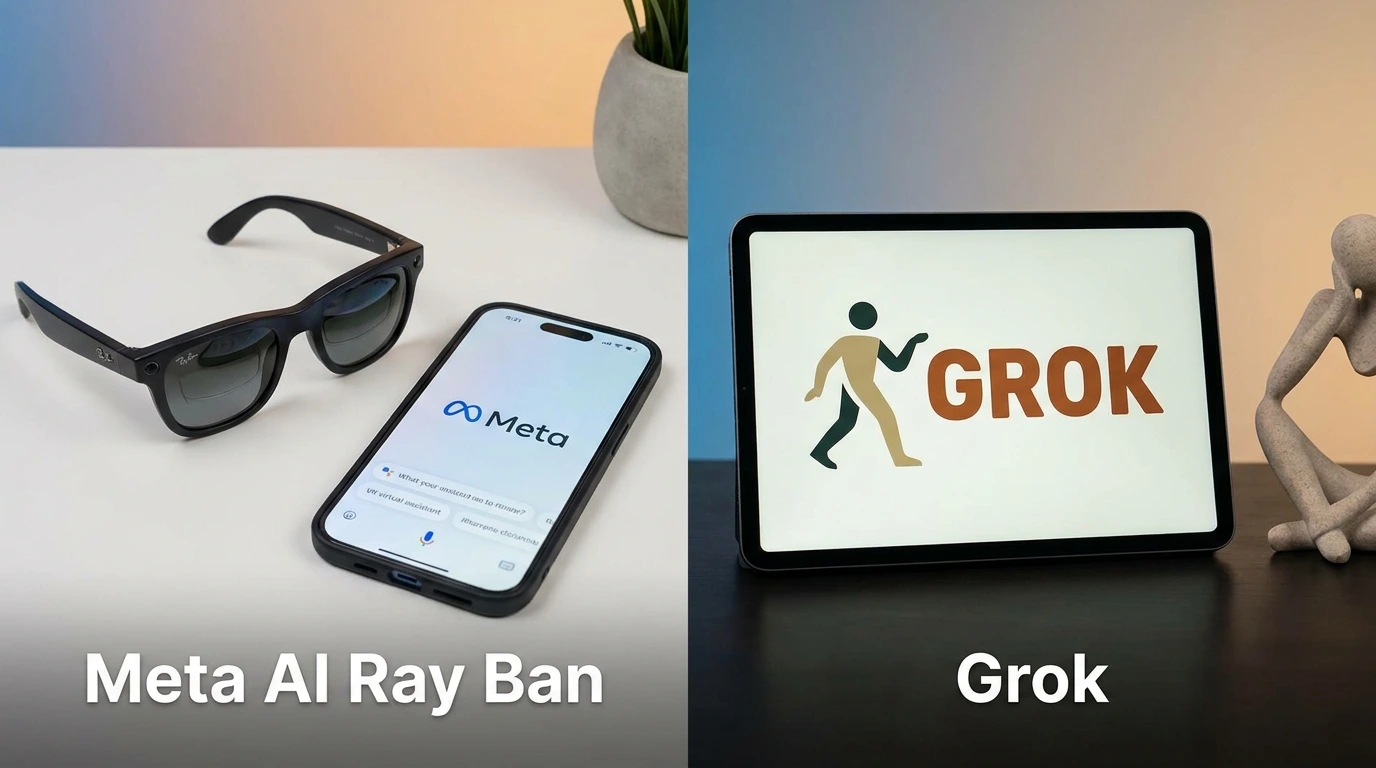
Artificial intelligence is no longer limited to chatbots or search engines—it now exists in your glasses, your phone, and even your social media feeds. Two major technologies are currently shaping this evolution: Meta’s Ray-Ban smart glasses and Grok AI Developed by xAI.
While both systems represent the future of AI, they are often misunderstood and controversially compared—especially when topics like “NSFW content,” “privacy risks,” and “nude detection claims” appear in online discussions.
However, most ranking articles mix unrelated ideas, creating confusion instead of clarity. This guide fixes that by separating facts from hype and explaining how wearable AI and conversational AI actually work.
By the end, you’ll understand:
- Why these technologies are NOT directly comparable
- How privacy risks differ drastically
- What “NSFW” actually means in AI systems
- And how Europe’s strict regulations influence both
What Are Meta AI Ray-Ban Smart Glasses?
Ray-Ban Meta Smart Glasses are advanced wearable devices combining fashion with artificial intelligence.
Core Features
- Built-in camera for photo/video capture
- Voice assistant (“Hey Meta”)
- Real-world object recognition
- Hands-free communication
- AI-powered contextual assistance
How They Work
Meta smart glasses operate through a hybrid system:
- Camera captures real-world environment
- A microphone processes voice commands
- Selected data is sent to cloud AI systems
- AI generates responses or actions
Key Insight
Unlike traditional AI chatbots, these glasses interact with your physical environment, making them part of the “always-on wearable AI” category.
What is Grok AI?
Grok AI is a large language model developed by xAI, designed to compete with ChatGPT and Claude-style systems.
Core Features
- Real-time responses using X (Twitter) data
- Conversational and humorous tone
- Text-based AI interaction
- Cloud-based processing
- No physical hardware integration
How It Works
- User sends a text prompt
- Model processes language patterns
- Retrieves contextual or real-time data
- Generates a conversational response
Key Insight
Grok AI is purely software-based intelligence, meaning it does not see, hear, or interact with the physical world.
Why “NSFW / Nude” Controversy Appears
A major SEO confusion arises from keywords like:
- “nude AI content”
- “NSFW Grok AI”
- “privacy scandal smart glasses”
Reality Check:
These topics are mostly driven by:
- Viral social media claims
- Misinterpretation of AI moderation limits
- Clickbait SEO articles
What Actually Happens:
AI Content Moderation (Grok AI)
Grok AI may generate edgy or less filtered responses depending on policy settings, but:
- It still follows safety layers
- NSFW content is regulated by system prompts
- It is NOT designed for explicit content generation
Smart Glasses Privacy Concerns
Meta smart glasses concerns are about:
- Camera usage in public spaces
- Data storage transparency
- Human review of AI interactions (in some cases)
Important: This is a privacy governance issue, not “hidden surveillance AI.”
Technical Architecture Comparison
Meta AI Ray-Ban System
- Multimodal AI (vision + audio + cloud processing)
- Edge + cloud hybrid computing
- Sensor-based data collection
- Real-world environmental input
Grok AI System
- Large Language Model (LLM) architecture
- Pure text input/output system
- Cloud-based inference
- Social data integration (via X platform)
Key Difference
Meta AI = “Sees the world”
Grok AI = “Talks about the world”
Privacy & Data Pipeline Analysis
Meta AI Glasses Privacy Flow
- Real-world capture (camera/mic)
- Temporary local processing
- Cloud transmission (selected data)
- Optional human review (for improvement)
Risks
- Public recording sensitivity
- Data retention concerns
- Transparency issues
Grok AI Privacy Flow
- Text input from the user
- Cloud processing
- Response generation
Risks
- Text data stored for model improvement
- Social media bias influences
- Content moderation inconsistencies
Head-to-Head Comparison Table
| Feature | Meta AI Ray-Ban Glasses | Grok AI |
| Type | Wearable AI device | Conversational AI |
| Input | Camera + voice | Text only |
| Output | Real-world assistance | Chat responses |
| NSFW Risk | Low (policy-based) | Medium (tone flexibility) |
| Privacy Risk | High (environment capture) | Medium (text data) |
| Hardware | Yes | No |
| Real-time awareness | Yes | Limited |

Pros & Cons Analysis
Meta AI Ray-Ban Pros
- Hands-free real-world interaction
- Strong multimodal AI capabilities
- Useful for travel and daily tasks
Meta AI Ray-Ban Cons
- Privacy concerns in public spaces
- Data transparency issues
- Limited user control in some regions
Grok AI Pros
- Fast conversational responses
- Real-time social awareness
- Engaging and flexible tone
Grok AI Cons
- Can reflect social media bias
- Limited safety consistency
- No real-world sensing ability
Use Case Breakdown
Meta AI Glasses Best For
- Travelers in Europe
- Outdoor navigation
- Accessibility support
- Real-time translation
Grok AI Best For
- Research assistance
- Content ideation
- Social trend analysis
- Entertainment conversations
Europe Regulatory Perspective
In Europe, privacy laws like GDPR significantly affect both technologies.
Key Compliance Areas
- Data consent requirements
- Right to data deletion
- Transparency in AI processing
- Restrictions on biometric capture
ImpactMeta’s
- Meta smart glasses face stricter scrutiny in public usage
- AI chatbots like Grok must ensure data minimization and explainability
How to Use These AI Tools Effectively
Meta AI Smart Glasses Tips
- Use in low-density public environments
- Always check recording indicators
- Review privacy settings regularly
Grok AI Tips
- Ask structured questions
- Avoid relying on unverified outputs
- Use for brainstorming, not final decisions
Tips to Write AI Tool Content
To rank high in Google:
- Focus on “intent separation” (hardware vs software AI)
- Avoid mixing NSFW keywords without context
- Add technical explanation layers
- Use comparison tables
- Target privacy-focused keywords
People Also Ask
A: No. The glasses do not continuously record, but they can capture images or video when activated. Users must control recording features manually.
A: Grok AI is designed with moderation systems. While it may have a more flexible tone, it is still restricted by safety policies.
A: Grok AI is generally more private because it does not capture real-world audio or video, unlike wearable devices.
A: Yes, but they must comply with strict GDPR rules regarding data collection and privacy transparency.
A: No. Grok AI is text-based and cannot interact with the physical environment like smart glasses.
Conclusion
Meta AI Ray-Ban smart glasses and Grok AI represent two completely different directions of artificial intelligence—one rooted in the Physical world and the other in conversational intelligence.
The confusion around “NSFW” or “nude-related” claims mostly comes from viral misinformation and SEO clickbait, not technical reality. The real debate is about privacy, data control, and ethical AI design, especially in regions like Europe where regulation is strict.
Ultimately:
- Meta AI = powerful wearable computing with privacy trade-offs
- Grok AI = flexible conversational intelligence with content policy risks
Understanding this distinction is essential for anyone researching AI in 2026.