Introduction
The debate around DeepSeek Stock Price vs Claude 2 Pricing has become one of the most searched topics in the AI economy space in 2026. Businesses, developers, and investors across the USA and Europe are trying to understand not just which AI model is cheaper, but also how these systems fit into the broader AI investment landscape.
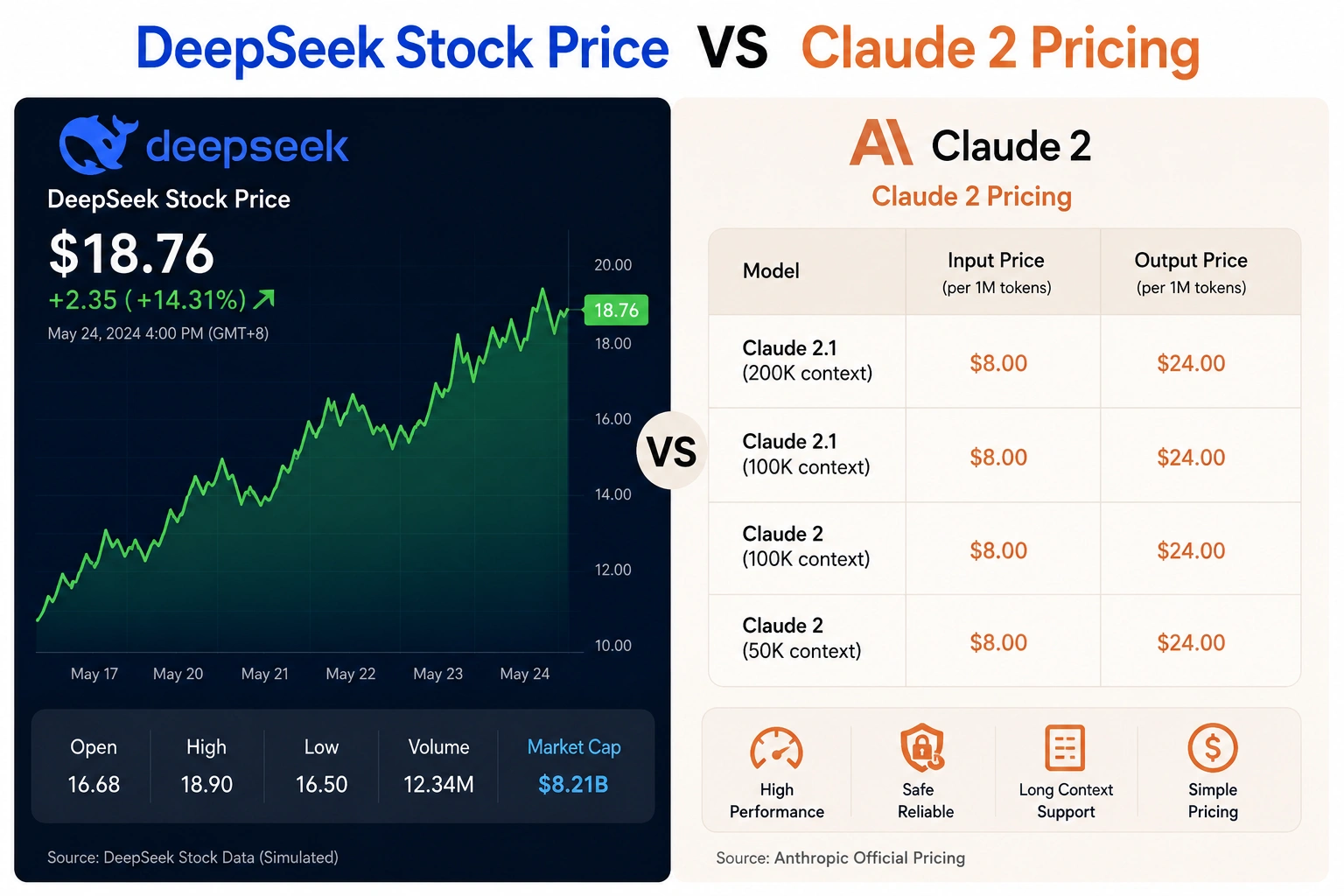
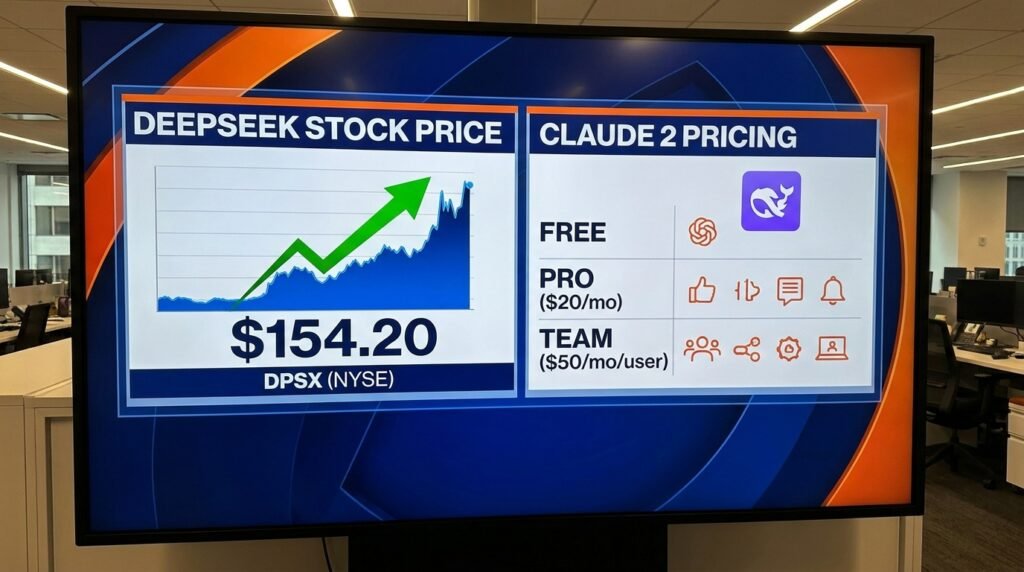
However, there is a major misconception: DeepSeek is not publicly traded, and Claude (developed by Anthropic) is also a privately held AI system. This means there is no real “stock price” comparison. Instead, the real value lies in understanding API pricing, token costs, scalability, and enterprise usage economics.
In this guide, we will break down everything in a structured way—pricing models, real-world cost simulations, performance differences, and investment perspectives. You will also learn which AI model is more cost-efficient for startups, enterprises, and developers building AI-powered applications in Europe and global markets.
Why DeepSeek Has No Stock Price
One of the biggest confusion points in search results is the idea of a “DeepSeek stock price.”
Key Reality:
- DeepSeek is not publicly listed
- No ticker symbol exists
- No stock exchange valuation is available
Instead, DeepSeek operates as a private AI model ecosystem focused on low-cost inference and high-volume AI usage.
Claude (Anthropic) Situation:
Claude is developed by Anthropic, which is also a private company backed by major investors like Amazon and Google.
Key Insight:
You are not comparing stocks—you are comparing:
- AI pricing structures
- Token economics
- Private company valuation ecosystems
DeepSeek Pricing Breakdown
DeepSeek is widely known for its aggressive pricing strategy in the AI industry.
Estimated 2026 Pricing Model:
| Token Type | Cost |
| Input Tokens | $0.27 per 1M |
| Output Tokens | $1.10 per 1M |
Example Calculation:
If you process:
- 1M input tokens + 1M output tokens
Total cost = ~$1.37
Why It Matters:
- Extremely low-cost AI inference
- Ideal for scaling SaaS products
- Best suited for bulk AI generation workloads
Claude 2 Pricing Explained
Claude (Anthropic’s AI model family) is positioned as a premium AI system.
Typical Pricing:
| Token Type | Cost |
| Input Tokens | $8 per 1M |
| Output Tokens | $24 per 1M |
Example Calculation:
- 1M input + 1M output tokens
Total = ~$32
Key Insight:
Claude is approximately 20–25× more expensive than DeepSeek in real-world usage scenarios.
Why Claude Costs More:
- Higher reasoning accuracy
- Stronger safety Alignment
- Enterprise-grade reliability
- Large context handling capabilities
Real Cost Simulation
Let’s compare real-world monthly usage.
Scenario:
10M input + 10M output tokens per month
| Model | Monthly Cost |
| DeepSeek | ~$13.7 |
| Claude 2 | ~$320 |
Result:
Claude is roughly 23× more expensive
DeepSeek vs Claude: Feature Comparison
| Feature | DeepSeek | Claude 2 |
| Pricing | ⭐ Extremely Low | ❌ High |
| Reasoning | Medium–High | ⭐ Very High |
| Coding Ability | Strong | Stronger Consistency |
| Context Window | 64K–128K | Up to 100K–1M |
| Speed | Fast | Moderate |
| Best Use Case | Scalable apps | Enterprise AI systems |
Performance vs Cost Tradeoff
DeepSeek Advantages:
- Ultra-low operational cost
- Ideal for startups
- High scalability
- Efficient batch processing
Claude Advantages:
- Superior reasoning quality
- Better long-context understanding
- Strong enterprise reliability
- Safer outputs for critical use cases
Which AI Model Is Cheaper in 2026?
Clear Winner: DeepSeek
However, “cheaper” depends on usage goals:
DeepSeek if:
- You are building SaaS platforms
- You need bulk content generation
- You want minimal API cost
- You prioritize scaling
Claude if:
- You need high-accuracy reasoning
- You build enterprise AI tools
- You require stable outputs
- You handle complex workflows
Investment Perspective: DeepSeek vs Anthropic
This section addresses the “stock price” confusion.
DeepSeek:
- No public stock price
- Not directly investable
- Competes via a pricing disruption model
Anthropic (Claude):
- Multi-billion dollar private valuation
- Backed by Amazon & Google
- Strong enterprise AI positioning
Key Insight:
- DeepSeek = cost disruption strategy
- Claude = premium AI moat strategy
How to Use These AI Tools
Step 1: Define Use Case
- Content generation
- Coding assistance
- Customer support automation
Choose Model
- DeepSeek → cost-heavy tasks
- Claude → high-quality reasoning tasks
Optimize Token Usage
- Reduce prompt redundancy
- Use structured outputs
- Limit unnecessary context
Tips to Optimize AI Pricing
- Use shorter prompts
- Cache repeated responses
- Batch API requests
- Use a hybrid model strategy (DeepSeek + Claude)
- Monitor token usage monthly
Europe Market Relevance
Across Europe—especially in countries like Germany, France, the Netherlands, and Sweden—businesses are rapidly adopting AI APIs to reduce operational costs.
- Startups prefer low-cost models like DeepSeek
- Enterprises prefer Claude for compliance-heavy workflows
- EU Regulations also influence model selection due to data privacy rules
This makes pricing comparison even more important for European AI adoption strategies.
Pros & Cons
DeepSeek Pros
- Very low cost
- Highly scalable
- Good for automation
- Efficient for startups
DeepSeek Cons
- Lower reasoning accuracy
- Less enterprise adoption
- Limited premium features
Claude Pros
- High reasoning quality
- Strong enterprise reliability
- Better for complex tasks
Claude Cons
- Expensive at scale
- Not ideal for bulk generation
- Limited cost efficiency
FAQs
A: No, DeepSeek is not listed on any stock exchange and has no official stock price.
A: Claude focuses on high-quality reasoning, safety alignment, and enterprise reliability, which increases operational cost.
A: DeepSeek is generally better for startups due to its extremely low token pricing.
A: Partially. It can replace Claude in cost-heavy tasks but not in high-precision reasoning workflows.
A: The biggest difference is pricing efficiency vs reasoning quality.
Conclusion
The comparison of DeepSeek stock price vs Claude 2 pricing is not really about stock markets—it is about understanding the economics of modern AI systems. DeepSeek represents a disruptive, Cost-Efficient model that enables large-scale AI deployment at extremely low prices. Claude, on the other hand, represents a premium AI system focused on quality, reasoning depth, and enterprise reliability.
For businesses in Europe and the USA, the decision is not about which is “better,” but which aligns with operational goals. Startups and developers often prefer DeepSeek for its scalability and affordability, while enterprises lean toward Claude for accuracy and compliance-driven workflows.
In 2026, the AI landscape is clearly shifting toward hybrid usage strategies where companies combine multiple models to optimize both cost and performance. Understanding this balance is key to building competitive AI-powered applications.
If you are building or investing in AI tools, always evaluate based on cost per token, scalability, and real-world use case performance—not just popularity or hype.