Introduction
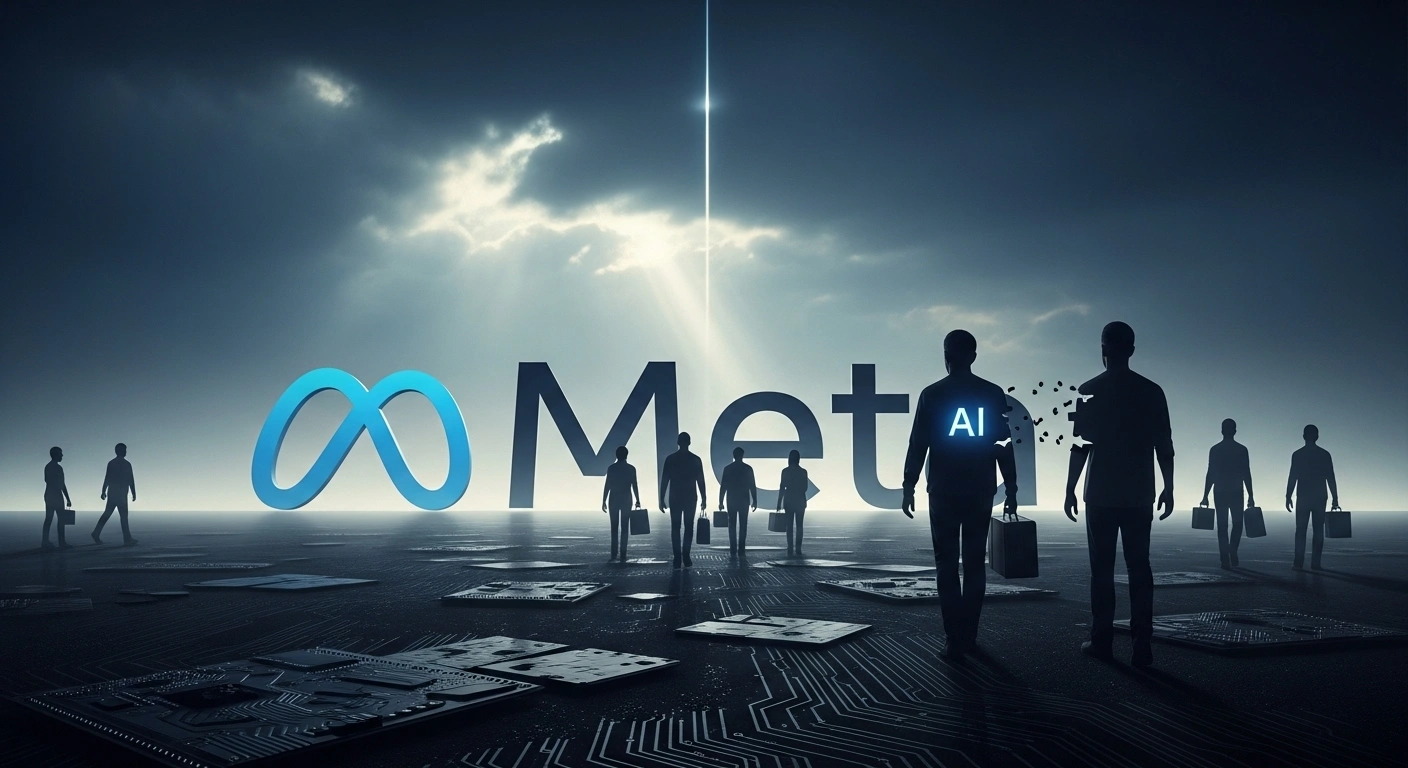
The Meta AI layoffs in 2026 are not simply another instance of workforce reduction. They represent a fundamental transformation in how modern Corporations operate in an increasingly intelligent, automated, and data-driven world.
Most mainstream headlines reduce the situation to phrases like “hundreds dismissed” or “corporate downsizing.” However, such summaries barely scratch the surface. The deeper reality reflects a structural evolution—a shift from human-centric workflows to AI-augmented ecosystems.
This is not merely about job cuts.
This is about a paradigm shift in global work dynamics.
Major technology firms, especially Meta, are transitioning toward:
- AI-powered productivity
- Leaner and more agile teams
- Automation-first operational models
- Algorithm-driven decision-making
Put simply:
Companies are no longer scaling through headcount expansion—they are scaling through computational intelligence.
This transformation carries global implications. Whether you are based in Europe, the United States, or emerging markets, this shift affects:
- Students preparing for future careers
- Professionals navigating job security
- Developers adapting to new tools
- Entrepreneurs building scalable systems
Understanding how artificial intelligence is redefining employment is no longer optional—it is essential.
This comprehensive guide breaks down everything in simple yet insightful language:
- Why Meta is reducing its workforce
- Which roles are vulnerable
- How AI is reshaping industries
- What this means for your long-term future
Meta Layoffs 2026: Key Facts & Numbers
To understand the magnitude of the situation, let’s examine the core data.
| Metric | Data Insight |
| Estimated layoffs | Up to 15,000+ employees |
| Workforce size (2025) | Around 79,000 employees |
| Previous layoffs (2022–23) | 21,000+ roles |
| AI investment | $115B–$135B+ projected |
| Key affected divisions | Reality Labs, HR, Sales |
Key Takeaways
This is not a temporary cost-reduction exercise.
This is a deliberate strategic pivot toward AI leadership.
Meta is reallocating resources from:
- Human labor → Intelligent systems
- Traditional departments → Digital infrastructure
- Manual processes → Automated pipelines
Why Meta Is Laying Off Employees
AI Efficiency Over Headcount
The most significant driver behind Meta AI layoffs in 2026 is efficiency optimization through artificial intelligence.
Before AI Integration
- Tasks required 10–15 individuals
- Workflows were slower and repetitive
- Human dependency was high
After AI Adoption
- Same tasks handled by 1–2 professionals
- Execution is faster and more precise
- Automation reduces redundancy
Examples
- Content generation → AI-powered tools
- Customer support → Conversational AI systems
- Software development → Intelligent coding assistants
Outcome:
- Reduced workforce requirements
- Increased productivity per employee
- Higher operational efficiency
Massive AI Infrastructure Costs
Artificial intelligence is not inexpensive—it requires substantial capital investment.
Meta is allocating billions toward:
- Global data centers
- Advanced GPU clusters
- AI research facilities
- High-performance computing systems
- These expenditures are enormous.
To sustain this level of investment
- Companies optimize budgets
- Non-essential costs are reduced
- Workforce reductions occur
In simple terms:
Funding AI innovation often necessitates cutting traditional expenses—including jobs.
Strategic Shift Away from the Metaverse
Meta previously invested heavily in building the metaverse ecosystem. However, priorities have shifted.
Challenges with the Metaverse
- Slow adoption globally
- High cost of VR hardware
- Limited user engagement
- Uncertain monetization
Reality Labs Situation
- Billions in financial losses
- Downsizing of teams
- Reduced strategic importance
Conclusion:
AI offers faster returns, scalability, and clearer profitability compared to the metaverse.
AI vs Jobs: Is Meta Replacing Humans?
Short Answer: YES — But Not Entirely
Meta is not eliminating human roles. Instead, it is redefining them.
What’s Actually Happening
- Low-value roles are being eliminated
- AI-centric roles are expanding
- Hybrid positions (human + AI) are increasing
The New Workforce Model
| Old Model | New AI Model |
| Large teams | Compact, efficient teams |
| Manual execution | AI-assisted workflows |
| Fixed job roles | Multi-skilled professionals |
This creates a paradox
- Layoffs are increasing
- Hiring is also growing—but in different domains
The End of the Metaverse? Strategic Shift Explained
Is the metaverse obsolete?
Not entirely—but it is no longer the primary focus.
What Changed
- Declining investment in VR
- Limited global traction
- Higher ROI from AI technologies
Why AI Dominates
AI provides:
- Rapid scalability
- Immediate applications
- Lower long-term costs
Current Status of Reality Labs
- Still operational
- Reduced scale
- Lower strategic priority
Final Insight:
Artificial intelligence has become Meta’s central growth engine.
Which Jobs Are Most at Risk at Meta
High-Risk Roles
The following roles face the highest vulnerability:
- Recruitment and HR
- Middle management
- Customer service
- Non-AI product teams
Reason: These functions are highly automatable.
Low-Risk / High-Demand Roles
These roles are expanding rapidly:
- AI engineers
- Machine learning specialists
- Data analysts
- Infrastructure architects
Trend Insight:
- Routine roles ↓
- Advanced technical roles ↑
Industry-Wide Impact: Amazon, Google & AI Layoffs Trend
Meta is not an isolated case.
This reflects a global transformation across the tech industry.
Common Patterns
- Workforce reductions
- Increased AI spending
- Automation-driven systems
Examples
- Amazon → Operational optimization through AI
- Google → AI-first restructuring
- SaaS firms → Reduced reliance on operations staff
Conclusion:
Artificial intelligence is reshaping the entire digital economy.
What This Means for the Future of Work
Smaller Teams, Bigger Output
AI enables:
- Faster execution
- Reduced complexity
- Higher productivity
Even small startups can now compete with large enterprises.
Skill Polarization
Growing Demand
- AI engineers
- Data scientists
- Automation specialists
Declining Demand
- Repetitive tasks
- Administrative roles
AI-Augmented Workforce
The future is not:
Humans vs AI
Humans + AI collaboration
New Reality
- Workers will rely on AI tools daily
- Productivity will depend on AI literacy
- Adaptability will become essential
How to Use AI Tools to Stay Relevant
To remain competitive, adaptation is crucial.
Step-by-Step Strategy
Learn AI Fundamentals
Start with:
- Chatbots
- Automation platforms
Integrate AI Daily
Use AI for:
- Writing
- Research
- Task management
Upskill Continuously
Focus on:
- Data analysis
- AI fundamentals
Automate Workflows
Leverage tools to:
- Save time
- Improve efficiency
Build AI Projects
Create:
- Automated systems
- AI-driven applications
AI Skill Adoption Table
| Skill Level | Tools | Outcome |
| Beginner | ChatGPT, Notion AI | Productivity boost |
| Intermediate | Zapier, Make | Automation |
| Advanced | Python, ML models | Career growth |
Tips to Write AI Tool Captions
If you are a content creator, AI-driven content is highly valuable.
Best Practices
- Keep language simple
- Highlight benefits
- Use emotional triggers
- Stay concise
Example
“AI isn’t replacing jobs—it’s replacing outdated skills. Are you prepared?”
Europe Perspective: Why This Matters
Europe presents a unique case.
Current Trends
- Rapid AI adoption
- Leadership from Germany, France, and the UK
- Strong labor protections
However…
Transformation remains inevitable.
- Demand for AI skills is increasing.
- Skill shortages are expanding.
Pros & Cons
Advantages
- Improved efficiency
- Accelerated innovation
- Strong AI positioning
- Increased profitability
Disadvantages
- Job insecurity
- Skill gaps
- Social challenges
- Economic pressure
Expert Predictions: What Happens Next?
Industry experts anticipate:
- Continued layoffs
- Rise of AI-first companies
- Increased AI salaries
- Decline in traditional roles
Key Insight:
Meta is positioning itself as a dominant force in the AI revolution.
FAQs
A: Meta is reducing workforce size to cut costs and redirect resources toward AI infrastructure and innovation.
A: Hundreds have already been laid off, with projections reaching up to 15,000+ roles.
A: Especially repetitive and low-impact roles, while creating new opportunities in AI-related fields.
A: But it has been deprioritized in favor of AI technologies.
A: AI engineering, data science, and infrastructure roles are currently the most secure.
Suggested Internal Linking Topics
- Best AI Tools for Productivity in 2026
- AI vs Human Jobs: Future Predictions
- Top Automation Tools for Businesses
- How to Start a Career in AI
Conclusion
The Meta AI layoffs of 2026 are not just another wave of corporate restructuring.
They are a clear signal of the future.
We are entering a new era where:
- Artificial intelligence drives growth
- Organizations become leaner
- Skills outweigh job titles
The real takeaway:
The future does not belong to those who resist AI—it belongs to those who adapt, learn, and evolve with it.