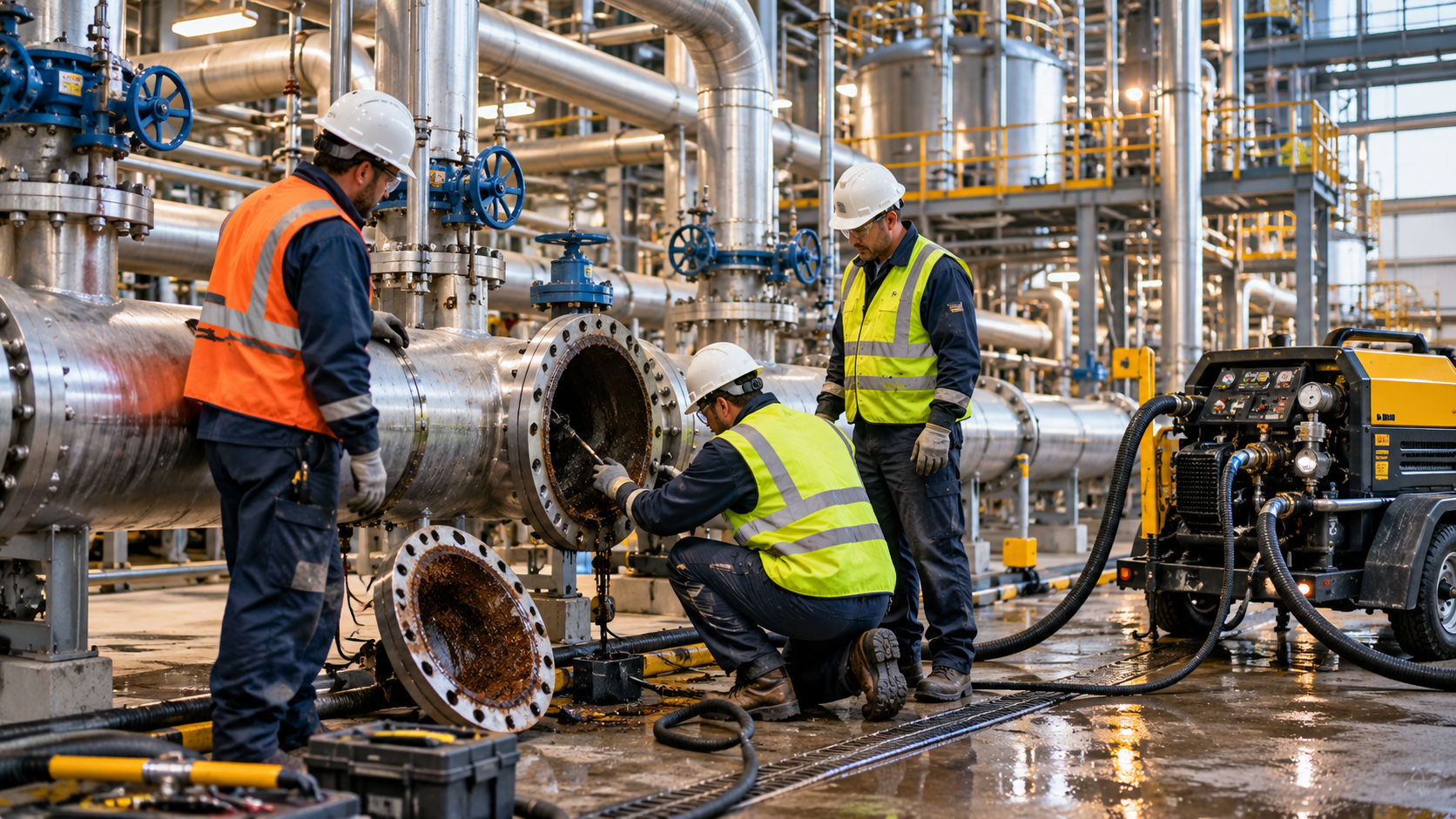
Inside a factory, refinery, or processing plant, pipes work around the clock. They move chemicals, water, oil, steam, and waste, and over time they collect what those materials leave behind. Scale, sludge, rust, and residue slowly narrow the passage until flow drops and equipment strains. That is why professional industrial pipeline cleaning services have become a routine part of plant maintenance rather than a last resort.
What Builds Up Inside Industrial Pipes
Different industries face different problems. Food and beverage plants deal with organic residue and bacteria. Chemical facilities see crystallized deposits. Power plants battle mineral scale from hard water, while oil and gas lines collect wax and sludge. Left alone, these layers reduce capacity, trap heat, and speed up corrosion underneath.
Signs It’s Time for a Cleaning
- Falling flow rates or pressure
- Pumps working harder and energy bills creeping up
- Frequent unplanned shutdowns
- Contamination or inconsistent product quality
- Visible corrosion or leaks around joints
If you notice more than one of these, it’s usually the point where industrial pipeline cleaning services can step in before a small issue becomes a breakdown.
Common Cleaning Methods
The right approach depends on the pipe material, the type of deposit, and how much downtime the plant can afford. Reliable industrial pipeline cleaning services typically choose from these:
- High-pressure water jetting: removes hard scale and sludge without harsh chemicals.
- Chemical cleaning: dissolves stubborn deposits and suits complex layouts.
- Pigging: pushes a device through the line to scrape and flush it, ideal for long runs.
- Mechanical cleaning: uses rotating tools to clear heavy blockages.
Benefits of Regular Cleaning
Clean lines move product more efficiently, which lowers energy use and reduces wear on pumps. Equipment lasts longer, product quality stays consistent, and inspections go more smoothly.
Most importantly, planned maintenance avoids the cost of an unexpected shutdown, which in heavy industry can run into thousands of dollars per hour. Many plant managers find that industrial pipeline cleaning services cost far less than the repairs they prevent.
Effective industrial maintenance also depends on how businesses organize their daily operations. Keeping accurate service records, scheduling inspections, and using digital tools to track equipment performance can help maintenance teams identify recurring problems before they interrupt production.
For more insights into technology, business processes, and productivity, explore the resources available on UltraAI Guide.
Choosing the Right Contractor
Look for a team with safety certifications, experience in your specific industry, and well-maintained equipment. Ask how they handle waste disposal and confined-space work, and whether they provide before-and-after inspection reports. A trustworthy provider of industrial pipeline cleaning services will explain the plan in plain language and won’t push a one-size-fits-all approach.
Final Thoughts
Pipes rarely get attention until output slows or something fails. A scheduled cleaning program keeps operations steady, protects your equipment, and supports safer working conditions. If your plant hasn’t had its lines serviced in a while, booking professional industrial pipeline cleaning services is a practical step toward fewer surprises and smoother production.