Introduction
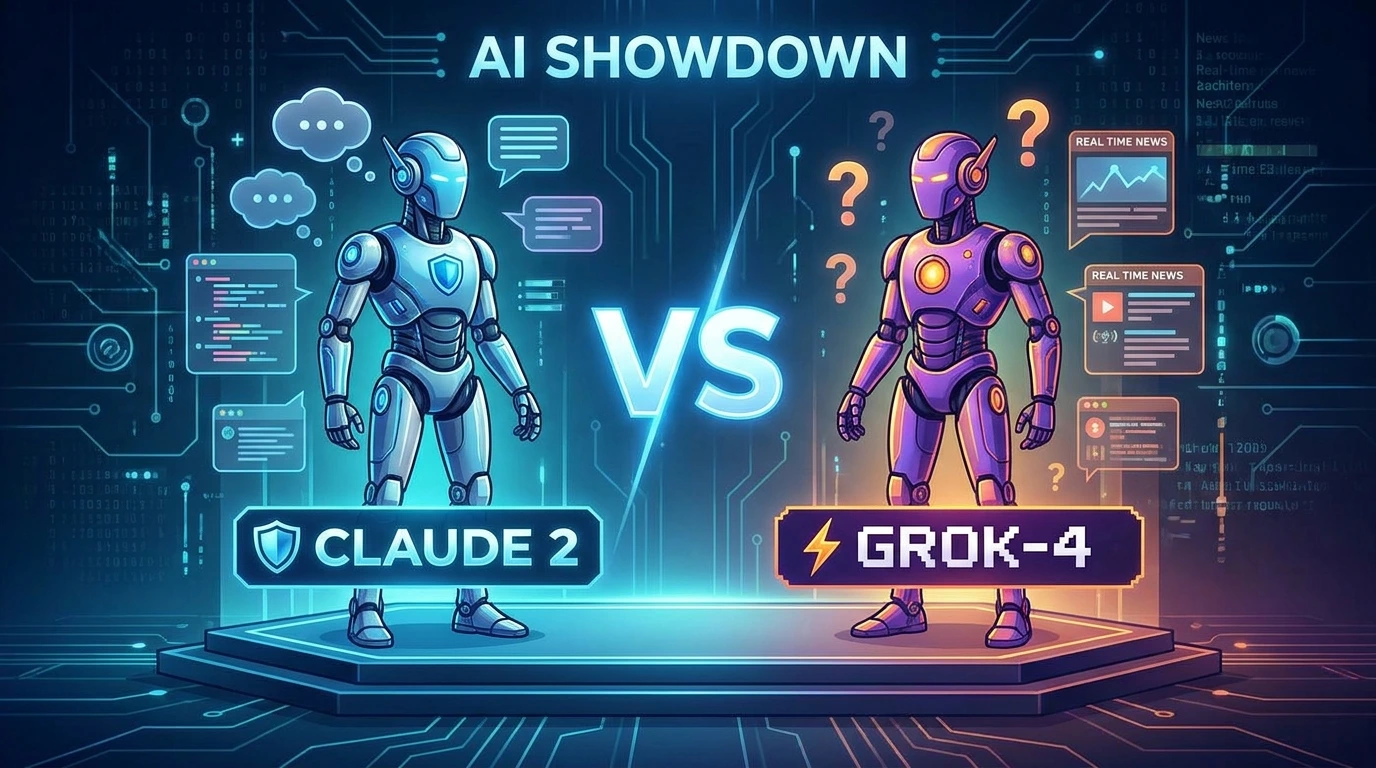
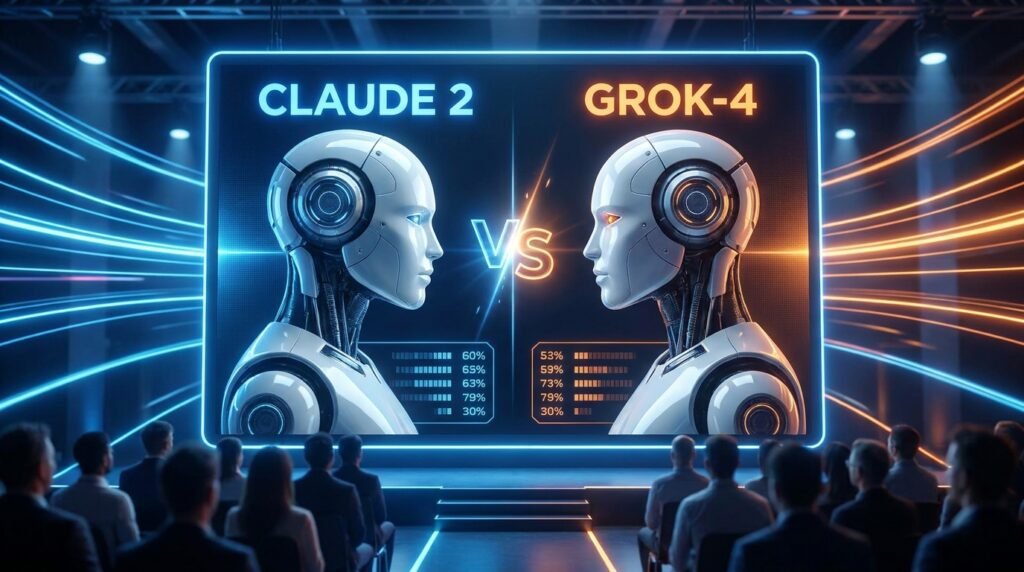
The AI landscape has evolved faster in the last few years than almost any other technology sector. Among the most talked-about comparisons today is Claude 2 vs Grok 4, two AI models that represent completely different generations of intelligence systems.
Claude 2 is part of the earlier wave of structured, safety-focused language models designed for stability, long-form writing, and predictable outputs. On the other hand, Grok 4 represents a modern shift toward real-time, agentic AI systems that can reason dynamically, access live information, and handle multimodal inputs.
For developers, content creators, researchers, and businesses in Europe and beyond, choosing the right AI model is no longer just about performance benchmarks—it’s about real-world usability, workflow integration, and adaptability.
In this detailed guide, we break down Claude 2 vs Grok 4 across coding, writing, reasoning, architecture, and real-life scenarios. You’ll also see a clear winner-by-use-case analysis, comparison tables, pros & cons, and SEO-focused insights to help you understand which model truly fits your needs in 2026.
What is Claude 2?
Claude 2 is an earlier-generation AI language model developed with a strong focus on safety, structured reasoning, and long-context understanding.
Key Characteristics of Claude 2
- Designed for stable and predictable responses
- Strong performance in long-form text processing
- Large context window for document analysis
- High emphasis on safe and controlled outputs
Core Strengths
- Excellent at summarizing long documents
- High-quality writing style (formal + structured)
- Reliable for academic and business content
- Low hallucination rate compared to older models
Limitations of Claude 2
- No real-time internet access
- No native multimodal capabilities (images/audio)
- Weaker reasoning compared to modern AI systems
- Considered outdated in the 2026 AI ecosystem
In simple terms, Claude 2 is a stable but legacy-level AI model.
What is Grok 4?
Grok 4 represents a new generation of AI systems designed for real-time intelligence, agent-based reasoning, and multimodal interaction.
Key Characteristics of Grok 4
- Real-time data processing capability
- Advanced reasoning engine
- Multimodal understanding (text + visual systems)
- Tool-using and agentic behavior
Core Strengths
- Access to live information streams
- Strong coding and debugging performance
- Better multi-step reasoning abilities
- Suitable for automation and AI agents
Limitations of Grok 4
- Still evolving safety alignment systems
- Can produce an inconsistent tone in some tasks
- Less predictable than Claude-style models
In simple terms: Grok 4 is a modern AI agent built for dynamic intelligence.
Claude 2 vs Grok 4: Feature Comparison Table
| Feature | Claude 2 | Grok 4 |
| Architecture | Traditional LLM | Agentic + Multimodal AI |
| Real-Time Data | ❌ No | ✅ Yes |
| Coding Ability | Moderate | Advanced |
| Writing Quality | Very Stable | Dynamic but variable |
| Reasoning | Basic-Moderate | Advanced |
| Context Handling | Strong | Strong + adaptive |
| Safety Level | Very High | Medium-High |
| Best Use Case | Writing, summaries | Research, coding, AI agents |
Real-World Use Cases
Coding & Software Development
Claude 2:
- Good at explaining code logic
- Works well for beginners
- Struggles with complex debugging
Grok 4:
- Advanced debugging capability
- Better multi-step reasoning
- Handles modern frameworks more effectively
Winner: Grok 4
Content Writing & Blogging
Claude 2:
- Highly structured writing style
- Consistent tone
- Ideal for formal documentation
Grok 4:
- More creative output
- Sometimes inconsistent tone
Winner: Claude 2
Research & Real-Time Intelligence
Claude 2:
- Static knowledge base
- No live updates
Grok 4:
- Real-time information processing
- Better for current events and trends
Winner: Grok 4 (by a large margin)
Reasoning & Problem Solving
Claude 2:
- Logical but limited depth
- Good for simple workflows
Grok 4:
- Multi-step reasoning engine
- Strong analytical capability
Winner: Grok 4
Business & Automation Use
Claude 2:
- Suitable for reports and summaries
- Limited automation Capability
Grok 4:
- Supports agent-based workflows
- Can integrate with tools and APIs
Winner: Grok 4
Architecture Difference Explained
Claude 2 Architecture
- Transformer-based static model
- Pre-trained dataset only
- No live data pipeline
Result: predictable but static intelligence
Grok 4 Architecture
- Hybrid agentic AI system
- Real-time data ingestion
- Tool-use integration layer
- Multimodal reasoning engine
Result: adaptive, dynamic intelligence system
Winner-by-Scenario Analysis
Developers
- Claude 2 → Basic coding help
- Grok 4 → Advanced software engineering tasks
Winner: Grok 4
Business Users
- Claude 2 → Reports, Documentation
- Grok 4 → Automation, analytics, live insights
Winner: Grok 4
Writers & Bloggers
- Claude 2 → Consistency
- Grok 4 → Creativity
Balanced, but Claude 2 preferred for editorial work
Researchers
- Claude 2 → Static summaries
- Grok 4 → Real-time research + updates
Winner: Grok 4
Pros & Cons Section
Claude 2 – Pros
- Stable and predictable output
- Excellent for structured writing
- High safety alignment
- Good for long document summarization
Claude 2 – Cons
- Outdated model generation
- No real-time awareness
- Limited reasoning depth
- No multimodal capability
Grok 4 – Pros
- Real-time intelligence system
- Strong coding and reasoning ability
- Multimodal and agentic design
- Better for automation workflows
Grok 4 – Cons
- Less predictable outputs
- Still evolving safety systems
- Can vary in tone consistency
How to Use These AI Tools Effectively
Claude 2 Use Cases
- Academic writing
- Business documentation
- Policy summaries
- Structured blog writing
Grok 4 Use Cases
- Software development
- Market research
- AI automation workflows
- Real-time analytics
Best strategy: combine both depending on task complexity.
Tips to Choose the Right AI Model
- Use Claude 2 for structured, formal writing tasks
- Use Grok 4 for real-time and technical tasks
- Avoid mixing both in the same workflow unless necessary
- Consider workload type: static vs dynamic
Europe-Focused AI Adoption Insight
Across Europe (especially in Germany, France, the Netherlands, and the UK), businesses are increasingly adopting AI hybrid workflows. Claude-style models are still used in regulated industries due to safety, while Grok-style systems are gaining traction in startups focused on automation and real-time analytics.
This dual adoption trend makes Claude 2 vs Grok 4 a highly relevant comparison for European AI users in 2026.
People Also Ask
A: Yes, Grok 4 is significantly more advanced in reasoning, real-time data, and coding performance compared to Claude 2.
A: Claude 2 is still used for stable writing, documentation, and controlled outputs in enterprise environments.
A: Not fully. While Grok 4 is more powerful, Claude 2 is still preferred for structured and predictable writing tasks.
A: Grok 4 performs better in debugging, multi-step logic, and modern software development tasks.
A: Claude 2 is easier for beginners due to its structured and predictable responses.
Conclusion
The comparison of Claude 2 vs Grok 4 clearly highlights the Evolution of artificial intelligence from static language models to dynamic, agent-based systems. Claude 2 remains a reliable option for structured writing, documentation, and predictable outputs, making it useful in regulated or formal environments.
However, Grok 4 represents the future of AI—real-time intelligence, advanced reasoning, multimodal input, and automation capabilities. For developers, researchers, and businesses aiming for speed and adaptability, Grok 4 delivers significantly higher value.
The final choice depends on your needs. If you prioritize stability and controlled writing, Claude 2 still holds value. But if you want cutting-edge AI performance with real-time intelligence, Grok 4 is the clear winner.
As AI continues to evolve rapidly across Europe and globally, understanding these differences is essential for making smarter technology decisions in 2026 and beyond.